Industrial kitchens and high-volume food service facilities in San Jose generate large amounts of fats, oils, and grease (FOG) every day. Without routine grease trap pumping, these materials accumulate inside the trap, reducing its capacity and increasing the risk of drain blockages, foul odors, plumbing failures, and health code violations. San Jose Industrial Grease Trap Pumping Service is an essential part of maintaining safe, efficient, and compliant commercial kitchen operations.
San Jose is home to a diverse food industry, including restaurants, hotels, hospitals, schools, food production facilities, and corporate cafeterias. These businesses rely on properly functioning grease traps to prevent grease from entering municipal sewer systems. EM Fire Protection provides professional grease trap pumping services that include complete waste removal, trap inspection, interior cleaning, line flushing, and environmentally responsible disposal to help commercial kitchens operate without interruption.
Why Industrial Grease Trap Pumping Is Essential
Grease traps are designed to capture fats, oils, and grease before wastewater enters the sewer system. As these materials build up, the trap becomes less effective.
Prevents Costly Plumbing Backups
When grease traps reach capacity, wastewater cannot flow efficiently, increasing the likelihood of sink backups and clogged drain lines.
Controls Unpleasant Odors
Decomposing grease and food particles create strong odors that can spread throughout kitchens and dining areas.
Supports Health Code Compliance
Routine pumping helps commercial kitchens meet sanitation and environmental regulations while maintaining documentation for inspections.
Protects Kitchen Operations
Preventive maintenance minimizes unexpected plumbing emergencies that could interrupt food service and business operations.
Signs Your Grease Trap Needs Pumping
Recognizing early warning signs can prevent expensive repairs and downtime.
Slow-Draining Sinks
Kitchen sinks draining slowly often indicate excessive grease accumulation inside the trap.
Grease Overflow
Visible grease around the trap or nearby drains suggests the system has exceeded its capacity.
Persistent Odors
Strong smells near floor drains or grease trap access covers usually indicate accumulated waste.
Frequent Drain Clogs
Recurring blockages often occur when grease moves beyond the trap into connected plumbing lines.
Job Story: Preventing a Restaurant Shutdown in San Jose
A busy industrial cafeteria serving hundreds of employees each day began experiencing slow drainage during lunch service. Staff also noticed foul odors near the dishwashing area, and water occasionally backed up into nearby floor drains.
The facility manager contacted EM Fire Protection before the issue became a major disruption.
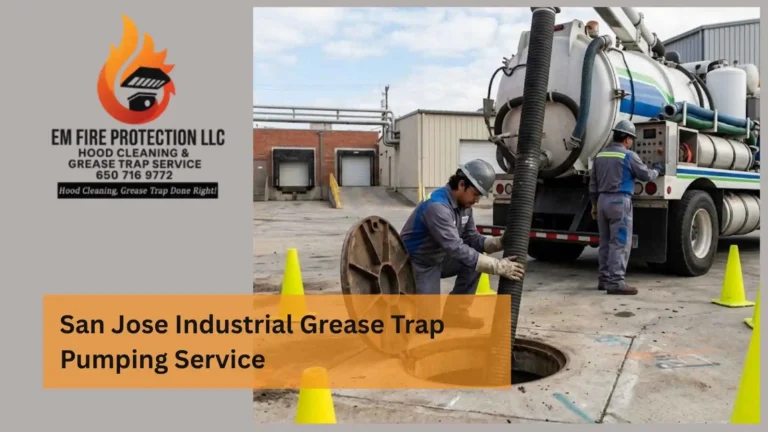
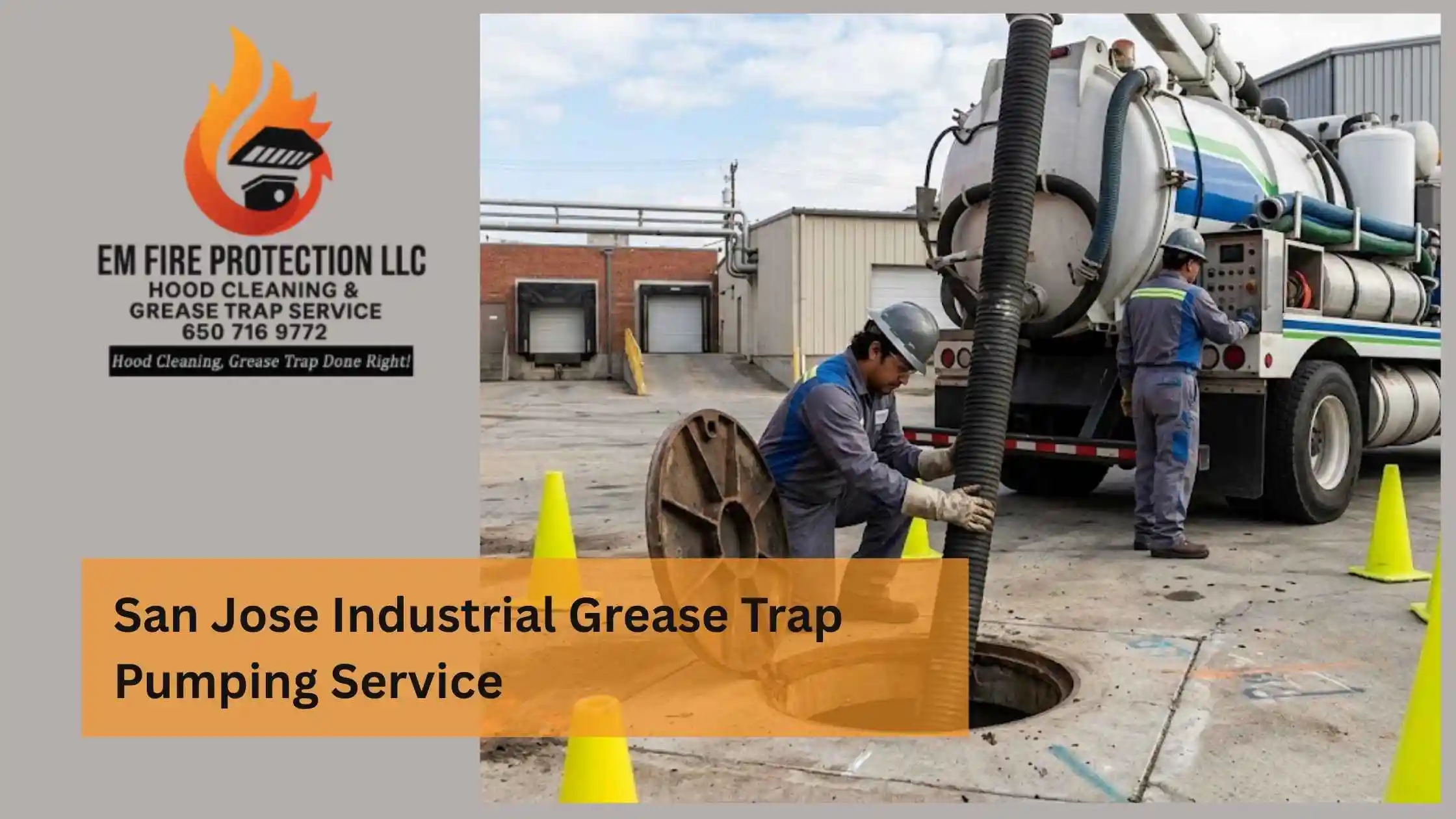
Technicians inspected the grease trap and discovered it was filled with accumulated fats, oils, grease, and food solids. Using professional vacuum equipment, they completely pumped out the trap, removed all wastewater and grease, manually cleaned the interior walls, baffles, and lid, then flushed the connecting drain lines to restore proper flow.
Once the service was complete, drainage returned to normal, odors disappeared, and the facility scheduled recurring maintenance to prevent future problems. Regular pumping helped the kitchen avoid emergency plumbing repairs and remain prepared for health inspections.
Professional Advantage: Why Grease Trap Pumping Requires Experts
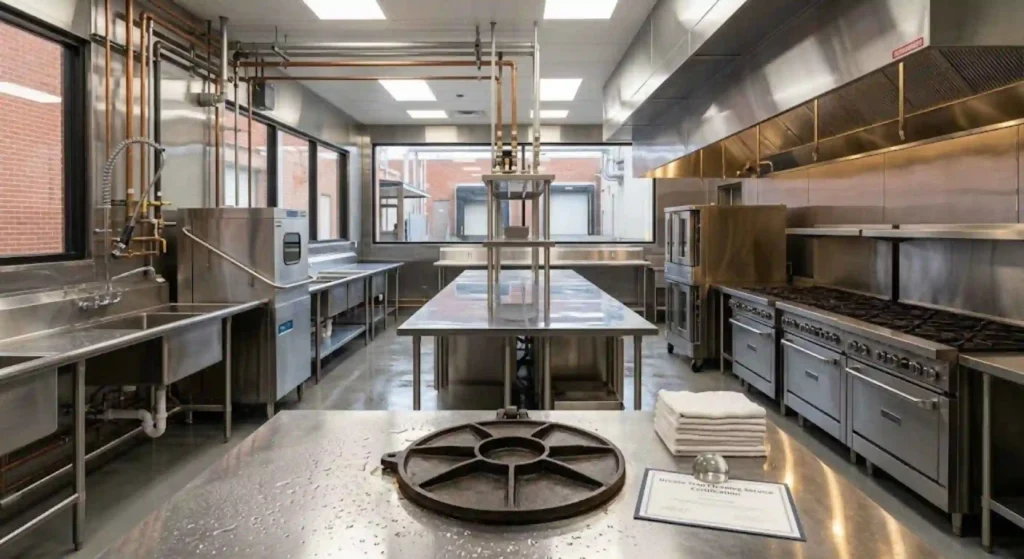
Industrial grease trap maintenance involves much more than removing visible grease.
Complete Inspection
EM Fire Protection begins every service by inspecting the grease trap, inlet and outlet pipes, and overall system condition to identify potential plumbing issues before they become costly repairs.
Vacuum Pumping Equipment
Industrial vacuum systems remove all accumulated grease, wastewater, and food solids quickly and efficiently.
Thorough Interior Cleaning
After pumping, technicians manually clean the trap’s walls, baffles, and lid to remove stubborn residue that reduces efficiency.
Line Flushing
Connecting drain lines are flushed to improve wastewater flow and reduce future grease buildup.
Proper Waste Disposal
All collected grease and waste are disposed of according to local environmental regulations, helping businesses remain compliant. Service records are also available to assist with inspection requirements.
Benefits of Scheduled Grease Trap Pumping
Routine maintenance delivers several long-term advantages.
Reduces Emergency Repairs
Preventive pumping minimizes unexpected plumbing failures and costly emergency service calls.
Improves Kitchen Hygiene
Removing grease buildup creates a cleaner, healthier work environment for employees.
Extends Equipment Life
Keeping grease traps and connected plumbing clean reduces wear on drainage systems.
Supports Business Continuity
Regular service helps restaurants and industrial kitchens avoid downtime caused by plumbing backups or failed inspections.
Industries That Benefit from Grease Trap Pumping
Professional grease trap pumping is ideal for:
- Restaurants
- Hotels
- Hospitals
- School cafeterias
- Universities
- Corporate dining facilities
- Food processing plants
- Catering kitchens
- Food trucks
- Commercial bakeries
EM Fire Protection customizes maintenance schedules based on each facility’s kitchen volume and grease production.
Why Choose EM Fire Protection?
EM Fire Protection has years of experience serving commercial kitchens throughout San Jose and the Bay Area. Their trained technicians provide complete grease trap pumping, inspections, interior cleaning, line flushing, proper grease disposal, and recurring maintenance programs designed to reduce plumbing issues and support health code compliance. By combining dependable service with attention to detail, they help businesses maintain safe, efficient kitchen operations while minimizing costly interruptions.
Frequently Asked Questions
How often should an industrial grease trap be pumped?
High-volume restaurants and industrial kitchens typically require pumping every 1 to 3 months, while lower-volume facilities may only need service every 3 to 6 months, depending on grease production.
What is included in grease trap pumping?
Professional service includes trap inspection, complete pumping of grease and wastewater, interior cleaning, line flushing, proper waste disposal, and service documentation.
Why is routine pumping important?
Routine pumping prevents drain blockages, controls odors, protects plumbing systems, and helps businesses comply with health and environmental regulations.
Does EM Fire Protection offer recurring maintenance?
Yes. EM Fire Protection offers customized maintenance schedules based on the size of your grease trap and your kitchen’s daily operating volume.
Schedule Your Grease Trap Pumping Service Today
A full grease trap can quickly disrupt your commercial kitchen, leading to unpleasant odors, plumbing backups, and costly downtime. EM Fire Protection provides professional industrial grease trap pumping services throughout San Jose, helping restaurants, hotels, schools, hospitals, and food production facilities maintain clean, efficient, and compliant operations. From complete pumping and interior cleaning to recurring maintenance programs, their experienced technicians deliver dependable service tailored to your business. Contact EM Fire Protection today to request a free estimate and schedule your next industrial grease trap pumping service.