Palo Alto restaurants and commercial kitchens deal with grease every day. Cooking oils, fats, food residue, and airborne grease can settle on cabinet doors, shelves, equipment, and other kitchen surfaces. At the same time, fats, oils, and grease, commonly called FOG, can enter sinks and drainage systems during food preparation and dishwashing. Palo Alto requires food facilities to manage FOG to help prevent sewer blockages and related environmental problems.
For restaurant owners, Removing Grease from Kitchen Cabinets should therefore be part of a broader commercial kitchen maintenance plan. Surface cleaning helps maintain a sanitary workspace, while professional grease trap service helps manage the grease that enters the wastewater system.
Removing Grease from Kitchen Cabinets in Palo Alto
Commercial kitchens produce much more grease than residential kitchens. Restaurants may operate for many hours each day, using fryers, grills, ranges, ovens, and other cooking equipment.
As food cooks, microscopic grease particles can become airborne. Steam and heat carry these particles around the kitchen, where they can settle on nearby surfaces.
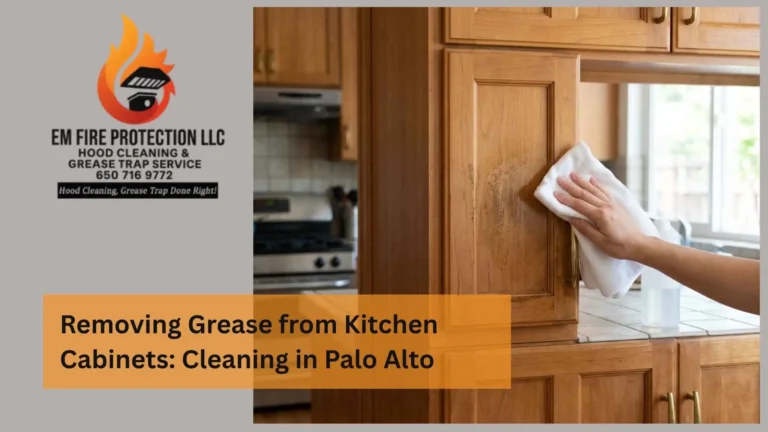
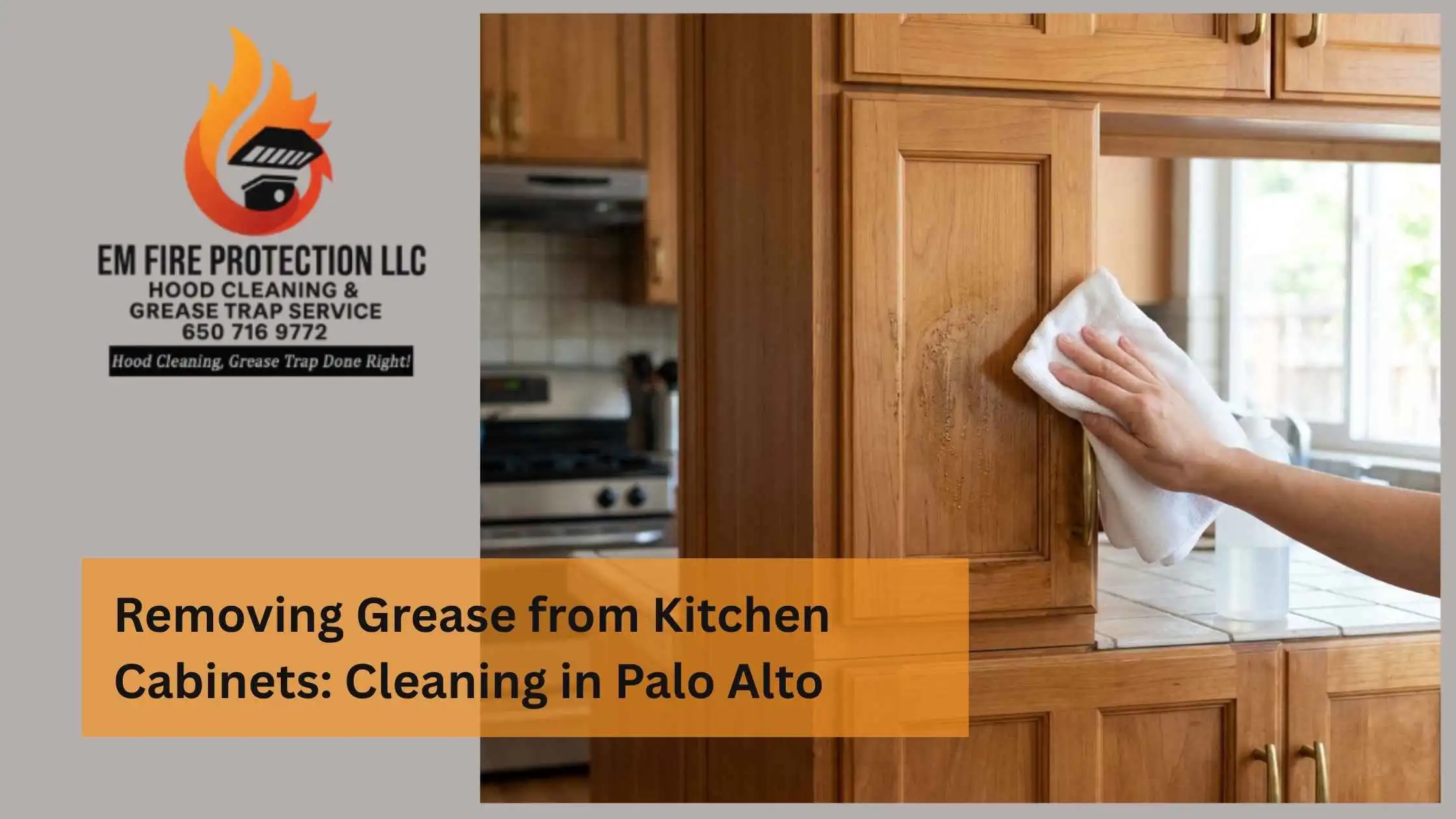
Cabinets are especially vulnerable because grease can combine with dust and food particles to create a sticky film. Once that layer becomes established, ordinary wiping may no longer be enough.
Busy Palo Alto restaurants can face this issue repeatedly because daily cooking continues to introduce new grease into the environment.
Areas Most Likely to Collect, Removing Grease from Kitchen Cabinets
Grease commonly accumulates around:
- Cabinet doors near cooking equipment
- Handles and drawer pulls
- Shelves beneath food-preparation areas
- Walls behind cooking stations
- Areas surrounding fryers and grills
- Undersides of cabinets
- Surfaces near sinks and dishwashing stations
Ignoring these areas can allow residue to become thicker and more difficult to remove.
A Palo Alto Restaurant’s Removing Grease from Kitchen Cabinets Problem
Consider a busy Palo Alto restaurant operating a compact commercial kitchen. The restaurant’s cooking line runs throughout the day, and employees regularly prepare fried and sautéed foods.
Over several months, the cabinet doors surrounding the cooking area developed a noticeable greasy film. Staff wiped the surfaces regularly, but the residue continued to return.
The restaurant manager also noticed stronger odors near the kitchen’s grease-handling areas and increasingly slow drainage from one of the sinks.
The two problems were related to the restaurant’s overall grease-producing operation, but they required different maintenance solutions.
The cabinet surfaces needed thorough cleaning, while the grease trap required professional service.
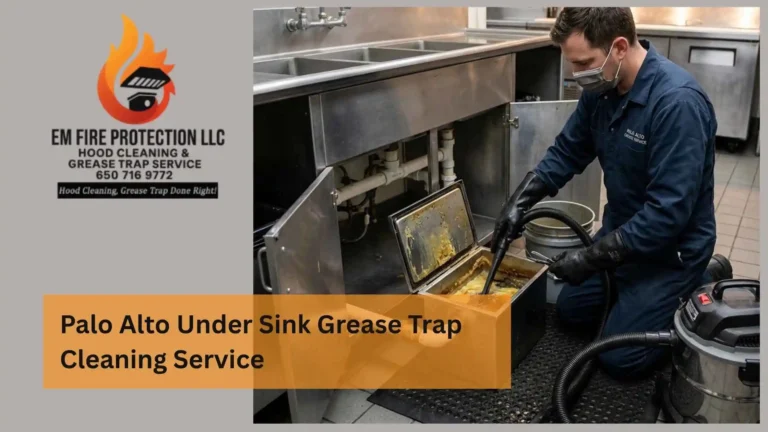
EM Fire Protection inspected the grease trap and assessed the buildup, including the inlet and outlet pipes. Technicians then removed accumulated grease, solids, and wastewater using vacuum equipment. The interior walls, baffles, and lid were manually cleaned, and connecting lines were flushed to help restore proper flow.
With the grease-management system properly maintained, the restaurant could focus separately on keeping its kitchen surfaces clean and sanitary.
Removing Grease from Kitchen Cabinets Requires More Than Wiping
Kitchen cabinets can look clean from a distance while still carrying a layer of grease.
Grease can become bonded to surfaces after repeated exposure to heat. When dust and food particles stick to that layer, the result may become difficult to remove with ordinary Removing Grease from Kitchen Cabinets.
Professional commercial kitchen cleaning is valuable when buildup has become extensive or when the kitchen needs to be restored after prolonged grease accumulation.
Why Professional Cleaning Matters
Restaurant kitchens contain electrical equipment, cooking appliances, food-contact surfaces, and other components that should not be exposed unnecessarily to excessive water or inappropriate cleaning products.
A professional cleaning approach considers the surface being cleaned and the surrounding equipment.
The goal is not simply to make cabinet doors look better. Proper cleaning should remove accumulated residue without unnecessarily damaging finishes, hardware, or nearby equipment.
The Connection Between Cabinet Grease and FOG Management

Cleaning cabinets and maintaining a grease trap are separate services, but both address the broader problem of grease generated by commercial food preparation.
Palo Alto’s FOG requirements apply to food facilities because fats, oils, and grease can enter sanitary sewer systems and contribute to blockages and overflows. The city requires food facilities to use and maintain appropriate grease control devices and follow applicable best management practices.
This means restaurant managers should look at grease control as a complete maintenance responsibility.
Surface Grease
Grease that settles on cabinets, walls, equipment, and other surfaces should be removed through appropriate kitchen cleaning procedures.
Drainage Grease
FOG that enters wastewater needs to be captured and managed through the restaurant’s grease control equipment.
A grease trap that becomes overloaded can cause slow drainage, odors, or overflow. EM Fire Protection’s cleaning process is designed to remove grease, solids, and wastewater before cleaning the internal components and flushing connected lines.
Why DIY Grease Removal Can Be a Problem
Restaurant employees can perform routine wiping and housekeeping, but heavy grease accumulation is different.
Using random household chemicals or excessive water on commercial kitchen cabinets can damage certain finishes or spread grease to other areas. More importantly, surface cleaning does not address grease accumulating inside the restaurant’s grease-management system.
Professional help is especially useful when:
- Grease has become thick or sticky
- Cabinet surfaces remain greasy after routine cleaning
- Buildup extends into difficult-to-reach areas
- Kitchen equipment surrounds the cabinets
- Persistent odors are present
- Drains are becoming slower
- The grease trap has not been serviced on schedule
Professionals can identify which problems are surface-cleaning issues and which require specialized grease-trap maintenance.
Professional Grease Trap Cleaning for Palo Alto Kitchens
While cabinet cleaning addresses grease on kitchen surfaces, grease trap maintenance protects the drainage system.
EM Fire Protection begins its grease trap service with an inspection. Technicians evaluate buildup levels, check inlet and outlet pipes for clogs, and look for damage that could affect flow.
The trap is then emptied using vacuum equipment. Grease, solids, and wastewater are removed before technicians manually clean the interior walls, baffles, and lid.
The connecting lines are also flushed to help restore proper flow and reduce downstream blockage risks. Removed grease and waste are disposed of according to applicable environmental requirements.
This professional process is important because an overloaded grease trap can eventually cause a much bigger kitchen problem.
Warning Signs Your Grease Management System Needs Attention
Restaurant managers should pay attention to early warning signs.
Slow Drains
A sink or floor drain that suddenly drains slowly may indicate grease accumulation restricting water flow.
Persistent Odors
Strong odors around a grease trap can develop when grease and food debris remain inside the system for too long.
Water or Grease Backups
Visible grease or wastewater backing up into a sink or floor drain should be treated as an urgent maintenance concern.
Recurring Plumbing Problems
Repeated drainage issues may indicate that simply cleaning the visible kitchen surfaces is not addressing the underlying grease-management problem.
EM Fire Protection identifies slow drains, persistent odors, and grease backing up into sinks or floor drains as warning signs that a grease trap may be approaching capacity.
Building a Better Kitchen Maintenance Routine
A clean commercial kitchen requires more than occasional deep cleaning.
Restaurant managers should maintain a routine that addresses both visible grease and grease entering the wastewater system.
Cabinets, handles, shelves, and surrounding surfaces should be cleaned according to the kitchen’s operating conditions. Grease traps should also be inspected and serviced based on kitchen volume and grease production.
EM Fire Protection offers recurring grease trap service options, including monthly, quarterly, and semiannual maintenance, allowing businesses to establish a schedule appropriate to their needs.
For Palo Alto restaurants, maintaining the grease-management side of the operation is particularly important because the city has specific FOG requirements for food facilities.
FAQs About Removing Grease from Kitchen Cabinets
What causes kitchen cabinets to become greasy?
Cooking produces airborne grease that can settle on nearby surfaces. Over time, grease can combine with dust and food particles, creating a sticky residue.
Can regular wiping remove heavy grease?
Routine wiping can help control fresh residue, but thick or long-standing buildup may require more thorough professional cleaning.
Does cleaning cabinets eliminate grease trap problems?
No. Cabinet cleaning addresses surface grease, while grease trap cleaning addresses FOG, solids, and wastewater accumulating inside the grease control system.
How do I know if my grease trap needs professional cleaning?
Slow drainage, strong odors, grease backups, or recurring plumbing problems can indicate excessive buildup. A professional inspection can determine the condition of the trap.
Why is professional grease trap cleaning important in Palo Alto?
Palo Alto food facilities must follow local FOG-control requirements designed to prevent grease from entering the sewer system and causing blockages or overflows.
Keep Your Palo Alto Commercial Kitchen Cleaner
Removing Grease from Kitchen Cabinets is an important part of maintaining a clean and professional food-service environment, but it should be considered alongside proper grease-management practices.
For Palo Alto restaurants, controlling grease means keeping cooking surfaces and cabinets clean while also maintaining the grease trap and connected drainage system. Professional grease trap service can help prevent buildup, odors, slow drainage, and overflow problems.
EM Fire Protection provides professional grease trap cleaning that includes inspection, complete removal of grease and solids, interior cleaning, line flushing, and appropriate waste disposal.
Contact EM Fire Protection today to schedule professional grease trap cleaning in Palo Alto or request a quote for your commercial kitchen.