Palo Alto restaurants and commercial kitchens face a constant plumbing challenge: managing the fats, oils, and grease produced during daily food preparation. Many smaller food-service operations use an Under Sink Grease Trap to capture this material before it enters the plumbing system. However, frequent cooking and dishwashing can cause grease and food solids to accumulate quickly. Without professional cleaning, a trap can develop foul odors, slow drainage, blockages, or even overflow into the kitchen.
Why Under Sink Grease Traps Matter in Palo Alto
Restaurants in Palo Alto often operate in compact commercial spaces where kitchen equipment, sinks, dishwashers, and drainage connections must work efficiently together. An under-sink grease trap provides an important barrier between kitchen wastewater and the plumbing system.
The trap separates fats, oils, and grease from wastewater before the material can travel farther into the drainage system. But the trap has limited capacity. Once it becomes filled with grease and solids, it cannot continue working effectively.
EM Fire Protection notes that grease traps can eventually produce odors, slow drainage, and overflow when they become overloaded. Its professional cleaning service is designed to remove grease, solids, and wastewater while helping commercial kitchens maintain smooth operations.
Common Signs of a Full Trap
Restaurant managers should not wait for a complete plumbing failure before arranging service. Warning signs may include:
- Slow kitchen sink drainage
- Strong odors near the trap
- Recurring drain clogs
- Grease or wastewater around the trap
- Unusual gurgling from connected drains
- Frequent plumbing problems
- Visible accumulation inside the trap
These symptoms can indicate that the Under Sink Grease Trap needs professional attention.
A Palo Alto Restaurant’s Grease Trap Problem
Consider a busy Palo Alto café that prepares breakfast, lunch, and beverages throughout the day. Because the kitchen operates in a relatively compact space, its under-sink grease trap receives wastewater from frequent dishwashing and food preparation.
The staff began noticing that the kitchen sink was draining more slowly. Soon, an unpleasant smell developed around the cabinet beneath the sink.
The restaurant initially assumed that the problem was a simple drain clog. However, an inspection showed that grease and food solids had accumulated inside the grease trap, reducing its available capacity.
Instead of attempting to remove the buildup manually, the restaurant manager arranged for professional grease trap cleaning.
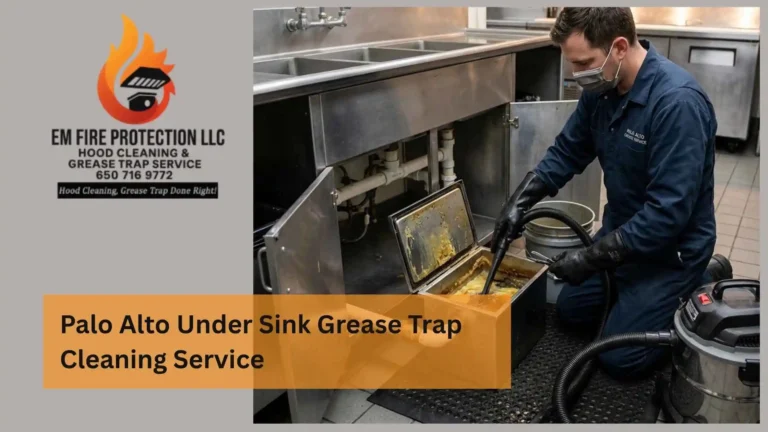
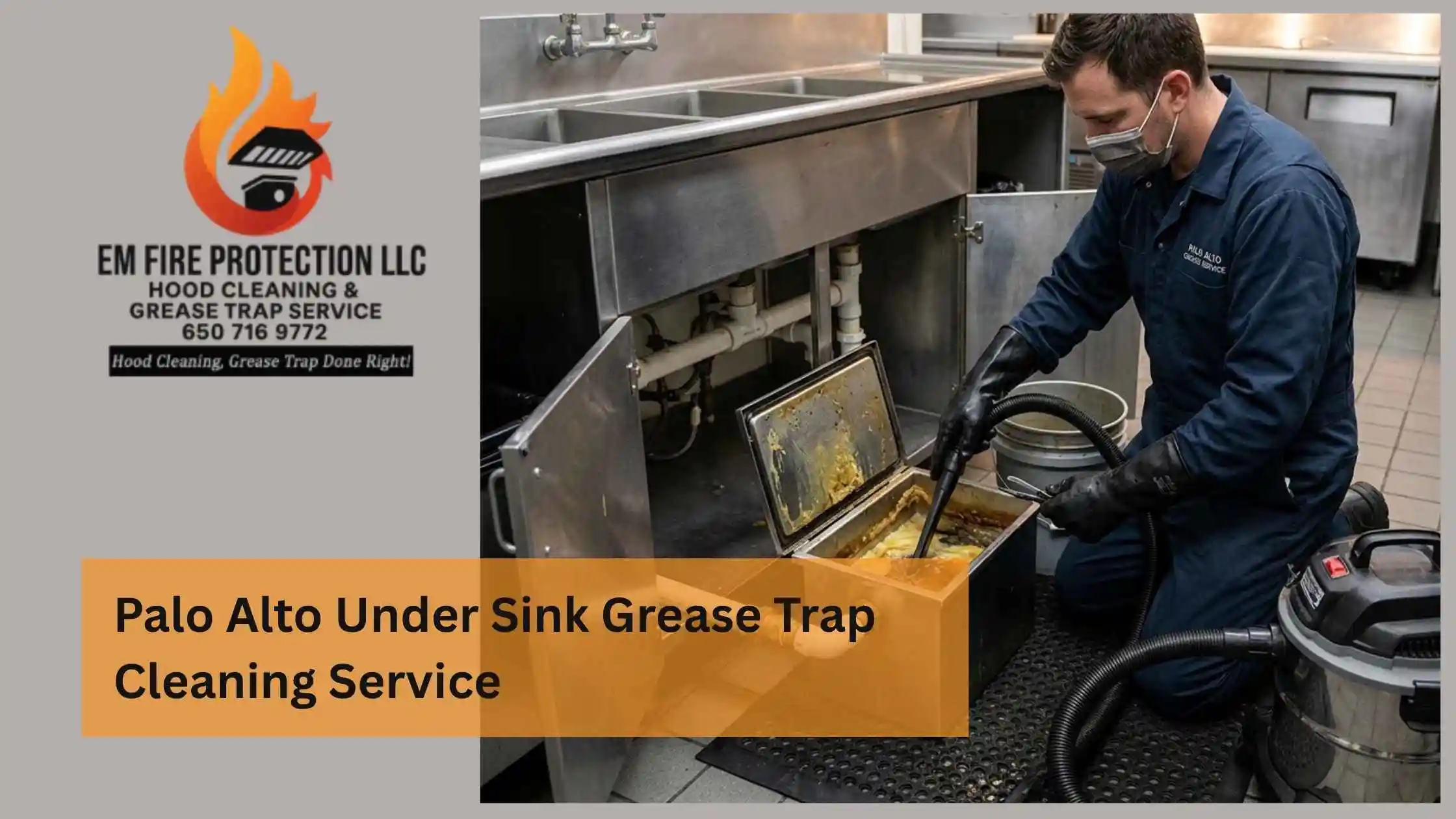
The technicians inspected the trap and checked the inlet and outlet pipes for signs of blockage or damage. They then used vacuum equipment to remove the collected grease, solids, and wastewater.
After the trap was emptied, the technicians manually cleaned the interior walls, baffles, and lid to remove stubborn residue. The connecting lines were also flushed to help restore proper flow.
Once the work was completed, the trap was left clean and functional, while the collected waste was handled according to appropriate environmental requirements. EM Fire Protection also provides service records upon request, which can help businesses maintain maintenance documentation.
Professional Under Sink Grease Trap Cleaning
An Under Sink Grease Trap may be smaller than a large outdoor interceptor, but cleaning it properly still requires the right process and equipment.
Simply removing visible grease from the top of the trap does not necessarily eliminate the accumulated material inside. Grease can adhere to internal surfaces, while food solids and sludge can settle around baffles and other components.
Professional technicians approach the job systematically.

Initial Trap Inspection
EM Fire Protection begins its grease trap service with an inspection. Technicians assess the amount of buildup and check inlet and outlet pipes for potential clogs or other issues that could affect wastewater flow.
This inspection is important because cleaning alone may not solve a problem caused by a damaged component or downstream blockage.
Complete Waste Removal
Professional vacuum equipment is used to remove grease, solids, and wastewater from the trap.
This is more thorough than scooping out visible grease or wiping the accessible surfaces. Removing the contents allows technicians to reach the internal areas where stubborn residue can accumulate.
Interior Cleaning
After pumping, the interior walls, baffles, and lid are manually cleaned.
This step helps remove remaining grease and residue that could otherwise reduce the trap’s effective capacity shortly after service.
Line Flushing
The connecting lines can also be flushed to help restore proper flow and reduce the chance of downstream blockages.
This makes professional cleaning more comprehensive than simply emptying the trap.
Why DIY Cleaning Is Not a Good Restaurant Solution
An under-sink grease trap may look simple, but commercial kitchen grease can be difficult to remove completely.
Restaurant grease contains a combination of fats, oils, food particles, wastewater, and other residue. As it accumulates, some of the material can become thick and difficult to remove without specialized equipment.
DIY cleaning can also create several problems.
Incomplete Grease Removal
Removing only the visible material may leave grease attached to the trap walls, baffles, and lid. Remaining buildup can quickly contribute to another maintenance problem.
Improper Waste Handling
Grease and wastewater should not simply be poured down another drain. Professional service includes appropriate collection and disposal of removed waste.
Missed Plumbing Problems
A professional inspection can identify issues around inlet and outlet connections that may otherwise go unnoticed.
Unnecessary Kitchen Disruption
For a restaurant, an overflowing or blocked grease trap can interrupt food preparation and cleaning activities. Planned professional maintenance helps reduce the likelihood of an emergency.
Preventing Odors and Drainage Problems
One of the most noticeable consequences of an overloaded grease trap is odor.
As grease and food waste remain trapped for extended periods, decomposition can produce unpleasant smells. EM Fire Protection identifies accumulated FOG, food debris, and infrequent cleaning as common causes of grease trap odors.
Regular professional cleaning removes the accumulated material responsible for these odors.
It can also help protect connected plumbing. When grease escapes an overloaded trap and enters downstream pipes, it can accumulate along the pipe walls and contribute to restrictions and blockages.
How Often Should an Under Sink Grease Trap Be Cleaned?
There is no single cleaning schedule that applies to every Palo Alto restaurant.
The right frequency depends on:
- Kitchen volume
- Number of meals prepared
- Amount of grease produced
- Sink usage
- Trap capacity
- Type of food prepared
- Existing grease accumulation
EM Fire Protection indicates that maintenance schedules should be tailored to kitchen volume and needs, with service options including monthly, quarterly, and semiannual maintenance.
High-volume restaurants may require more frequent service than smaller cafés or food-service operations.
Rather than waiting for an odor, backup, or overflow, restaurant managers can have the system assessed and establish a recurring maintenance schedule.
Why Palo Alto Restaurants Benefit From Professional Service
A functioning grease trap helps protect the restaurant’s plumbing system by capturing FOG before it travels farther into the drainage network.
Professional cleaning offers several practical benefits:
- Removes accumulated grease and solids
- Helps reduce unpleasant odors
- Supports proper drainage
- Identifies potential trap or pipe problems
- Reduces the chance of overflow
- Provides appropriate waste handling
- Helps maintain useful service records
For businesses that depend on reliable kitchen operations, preventive maintenance is generally more manageable than dealing with an unexpected backup during a busy service period.
FAQs About Under Sink Grease Traps
What is an Under Sink Grease Trap?
It is a compact grease-trapping device installed beneath or near a commercial kitchen sink. It captures fats, oils, grease, and food solids before they enter connected plumbing.
How do I know when my grease trap needs cleaning?
Slow drainage, foul odors, recurring clogs, visible grease, or wastewater around the trap can indicate that professional cleaning is needed.
Can I clean an under-sink trap myself?
Basic surface maintenance may be possible, but thorough commercial grease trap cleaning requires proper equipment, complete waste removal, internal cleaning, and appropriate disposal.
Does professional cleaning include the pipes?
EM Fire Protection’s process includes flushing connecting lines to help restore flow and reduce downstream blockage risks.
Can regular cleaning prevent emergencies?
Routine maintenance helps remove accumulated grease before the trap becomes overloaded, reducing the likelihood of odors, slow drainage, blockages, and overflow.
Schedule Under Sink Grease Trap Cleaning in Palo Alto
Don’t wait for a slow drain or foul odor to become a serious kitchen disruption. A professionally maintained Under Sink Grease Trap can help Palo Alto restaurants keep wastewater flowing properly and reduce the risk of grease-related plumbing problems.
EM Fire Protection provides professional grease trap cleaning that includes inspection, vacuum removal of grease and solids, interior cleaning, line flushing, and proper waste disposal.
Contact EM Fire Protection today to schedule Under Sink Grease Trap cleaning in Palo Alto or request a free estimate.