Restaurants in Palo Alto depend on commercial cooking equipment every day, but busy kitchens also create a local maintenance challenge: grease, smoke, steam, and airborne cooking residue can accumulate inside exhaust hoods and ductwork. In a city with a large mix of restaurants, cafés, hotels, and institutional kitchens, keeping these systems clean is an important part of maintaining safe and reliable kitchen operations. Routine Hood Exhaust Cleaning removes accumulated grease from critical exhaust components while helping restaurants maintain proper airflow and support fire-safety requirements.
Why Palo Alto Restaurants Need Routine Hood Exhaust Cleaning
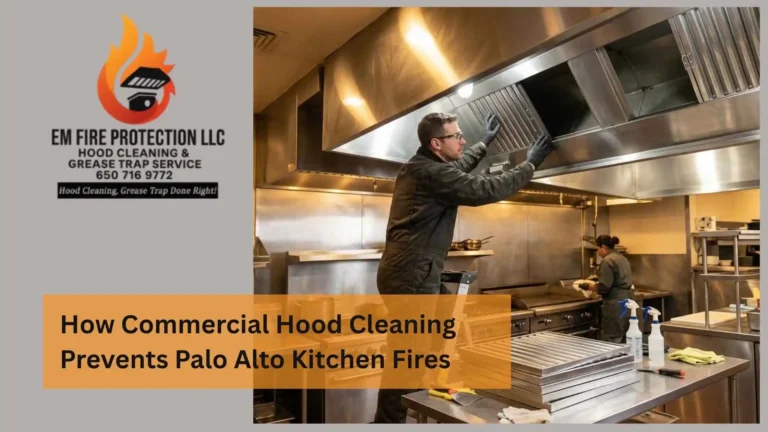
Every time a restaurant cooks food, heat and grease-laden air rises toward the exhaust hood. Filters capture some of that residue, but grease can also accumulate on the hood canopy, plenum, duct interiors, and exhaust fans.
As buildup continues, the exhaust system can become increasingly difficult to maintain. Grease-coated components may also affect airflow and create additional fuel for a potential kitchen fire.
EM Fire Protection explains that grease buildup inside commercial kitchen exhaust systems is a preventable fire hazard. Its professional cleaning process is designed to reduce this buildup while helping exhaust systems operate as intended.
For Palo Alto restaurant owners and managers, routine maintenance is therefore more than an appearance issue. It is part of keeping the cooking environment safer and the exhaust system functioning properly.
Common Signs Your Hood Exhaust Cleaning System Needs
Restaurants should pay attention to changes in their kitchen exhaust system. Warning signs can include:
- Visible grease around the hood
- Greasy or heavily soiled filters
- Persistent cooking odors
- Reduced exhaust performance
- Grease accumulation inside accessible duct areas
- Excessive residue around exhaust fans
- A hood system that has gone too long without professional service
Waiting until grease becomes heavily caked onto the system can make cleaning more difficult and increase the disruption required to restore the equipment.
A Palo Alto Restaurant Facing Heavy Grease Buildup
Consider a busy Palo Alto restaurant that operates throughout the week and regularly handles high-volume cooking. The kitchen team began noticing that the hood filters were becoming increasingly greasy between cleanings.
The visible filters were cleaned, but residue remained farther inside the exhaust system. Over time, grease accumulated on internal surfaces, including areas that kitchen employees could not safely or effectively reach.
The restaurant manager scheduled professional Hood Exhaust Cleaning rather than attempting to dismantle and clean the entire exhaust system internally.
The technicians began with an inspection to determine the level of grease buildup and identify accessible components that required attention. They protected nearby cooking equipment and surfaces before beginning the cleaning process.
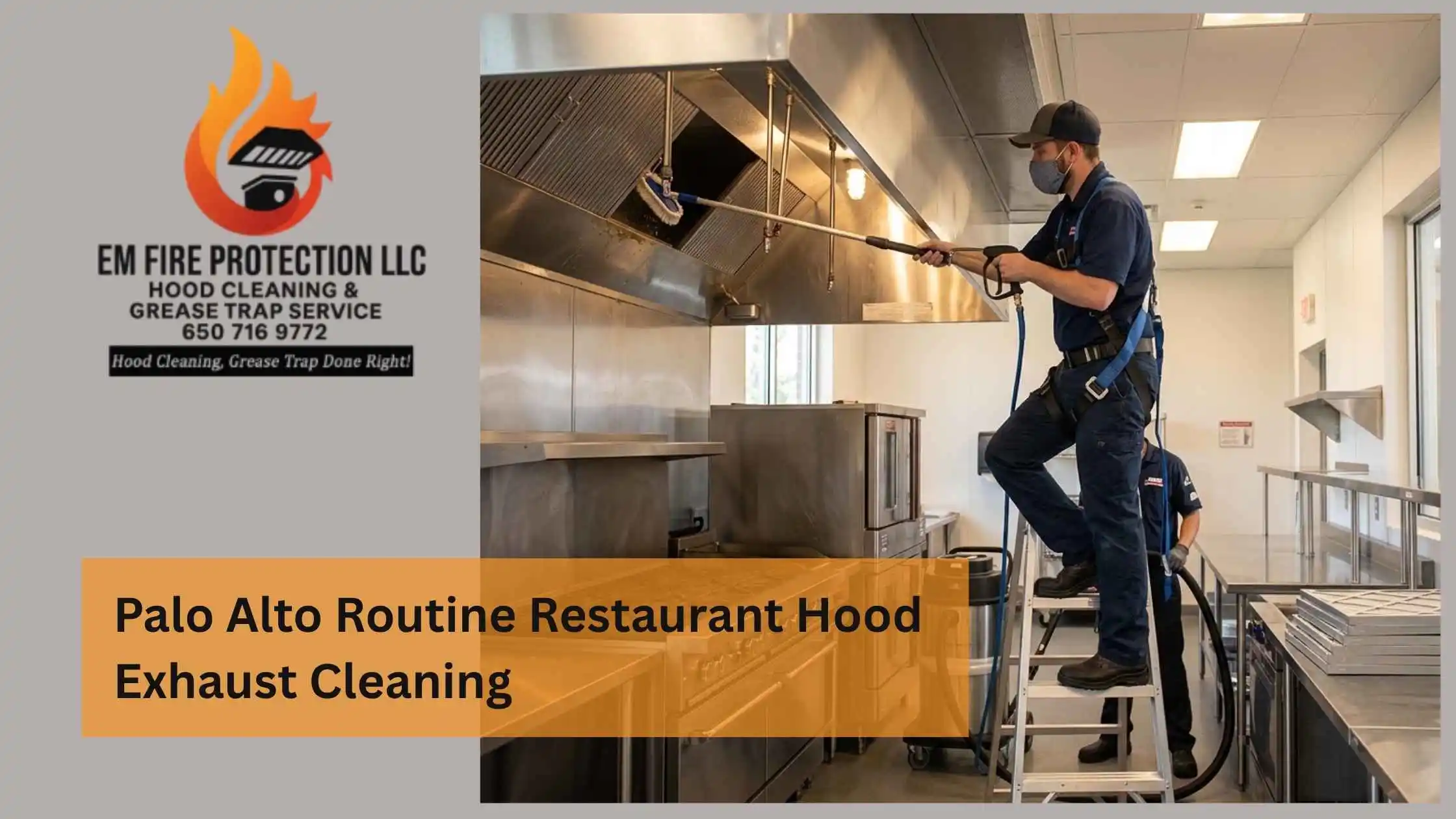
Heavy deposits were mechanically scraped, followed by the use of heated, food-service-approved degreasers and high-pressure rinsing. Filters were cleaned separately, while accessible areas of the plenum, ductwork, and exhaust fan were degreased.
Afterward, the stainless-steel surfaces were wiped and polished, filters were reassembled, and fan operation and airflow were checked.
The restaurant was left with a cleaner exhaust system and documentation of the service for its records. This type of professional Hood Exhaust Cleaning allows restaurant managers to address buildup systematically instead of waiting for an obvious exhaust or grease problem.
The Professional Advantage of Hood Exhaust Cleaning
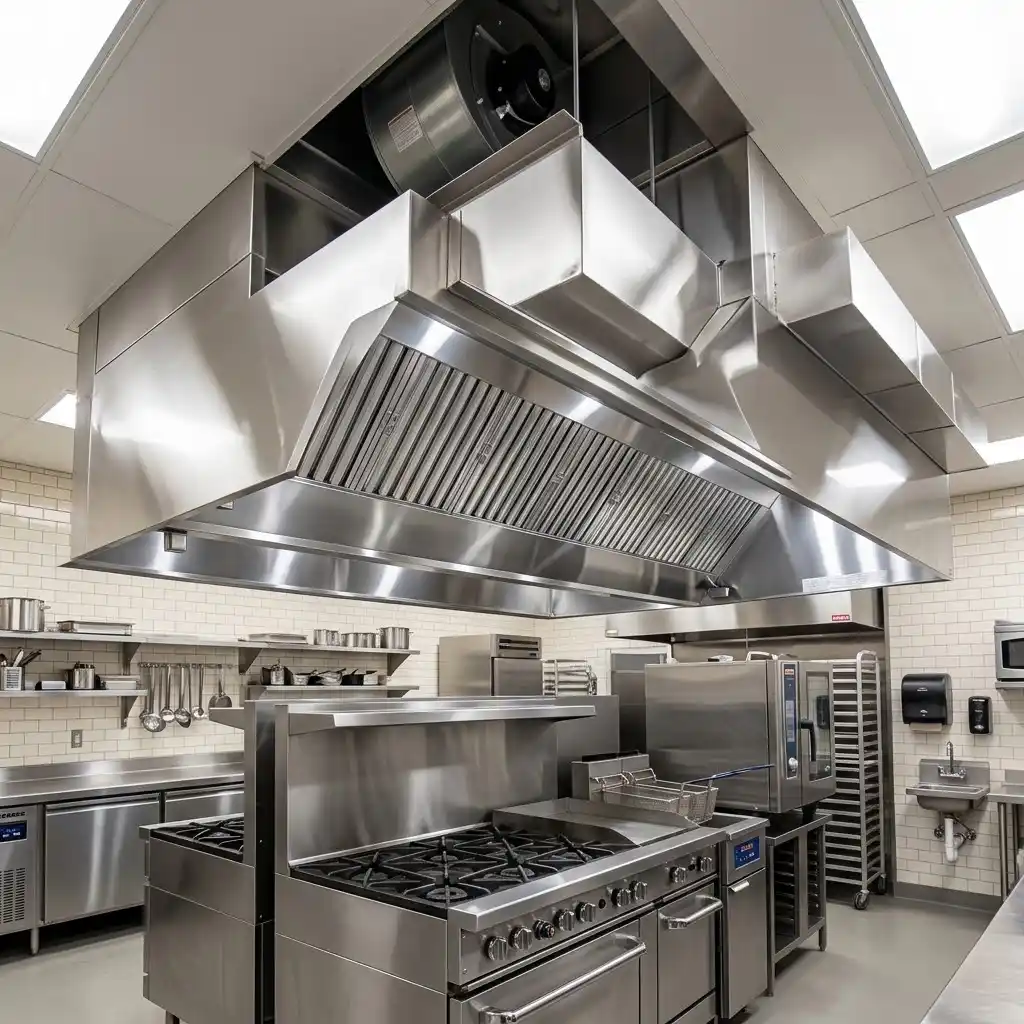
Commercial restaurant Hood Exhaust Cleaning is much more complex than a household range hood. Grease can travel through multiple connected components, including filters, plenums, horizontal and vertical duct runs, and exhaust fans.
Professional Hood Exhaust Cleaning is necessary because simply wiping the visible hood surface does not address grease that has accumulated deeper inside the system.
EM Fire Protection starts its service with a thorough inspection, checking grease levels, access panels, worn gaskets, fan belts, and surrounding equipment before cleaning begins.
Mechanical Removal of Heavy Grease
Thick grease deposits may not respond adequately to ordinary household cleaning products. Professional technicians can use mechanical scraping to remove heavier deposits before applying appropriate degreasers and rinsing equipment.
This approach is particularly important in commercial kitchens where cooking occurs frequently and residue can build up quickly.
Cleaning the Complete Exhaust Path
Effective Hood Exhaust Cleaning should extend beyond the visible hood canopy.
Depending on system accessibility, professional Hood Exhaust Cleaning service can include:
- Hood canopy
- Removable filters
- Plenum
- Horizontal ductwork
- Vertical ductwork
- Upblast fans
- Utility fans
- Accessible stainless-steel surfaces
EM Fire Protection describes a process that works from the cook line upward so loosened grease does not unnecessarily re-contaminate areas that have already been cleaned.
Protecting Restaurant Equipment
Professional preparation is another important part of the job. Cleaning solutions, grease, and wastewater need to be controlled so surrounding cooking equipment and kitchen surfaces are not unnecessarily contaminated.
Rooftop exhaust components also require careful handling. EM Fire Protection specifically notes attention to rooftop areas to help prevent runoff and protect roofing materials.
Why DIY Hood Cleaning Is Not Enough
Restaurant employees can clean removable filters as part of ordinary kitchen maintenance, but that does not replace professional exhaust-system cleaning.
The deeper components of a commercial exhaust system can be difficult to access. Duct interiors and exhaust fans may also contain substantial grease deposits that require specialized equipment and proper cleaning procedures.
Attempting to disassemble components without the appropriate knowledge can create additional problems. Damaged gaskets, loose fan components, improperly reassembled filters, or missed grease deposits can undermine the maintenance work.
Professional technicians understand how the different components work together and can inspect areas that are easy for untrained personnel to overlook.
For a restaurant, professional Hood Exhaust Cleaning is therefore a maintenance task best handled by an experienced service provider rather than treated as a routine kitchen chore.
Supporting Fire Safety and Kitchen Compliance
Grease accumulation inside an exhaust system is a significant concern because grease can act as fuel if exposed to sufficient heat or flame. Keeping the system clean reduces that accumulated fuel load.
EM Fire Protection states that its hood-cleaning service is designed to reduce grease buildup, support proper exhaust operation, and help commercial kitchens meet fire and health requirements. Its broader service information also references NFPA 96 standards and code-aware service.
Cleaning records can also be useful for restaurant management. After service, EM Fire Protection applies a service sticker showing the cleaning date and recommended next service window and can provide photo documentation for records, inspectors, or insurance carriers.
Setting the Right Cleaning Schedule
Not every Palo Alto restaurant has the same exhaust-cleaning needs. A restaurant with a high-volume cooking line may accumulate grease faster than a smaller operation with lighter cooking activity.
The appropriate service frequency can depend on factors such as:
- Cooking volume
- Type of food prepared
- Hours of operation
- Cooking equipment
- Amount of grease produced
- Existing buildup
- Exhaust-system configuration
Instead of using a one-size-fits-all schedule, restaurant managers can have the system assessed by a professional and establish a maintenance interval appropriate for the kitchen.
EM Fire Protection offers flexible scheduling intended to minimize kitchen downtime and can help determine an appropriate cleaning frequency for both high-volume and moderate operations.
Keep Your Palo Alto Restaurant Exhaust System Clean
A commercial hood does much more than remove visible smoke from a kitchen. It is part of the restaurant’s overall ventilation and fire-safety system.
When grease accumulates inside the hood, ductwork, and exhaust fan, cleaning the visible surfaces alone is not enough. Professional Hood Exhaust Cleaning addresses the system more comprehensively using inspection, mechanical grease removal, approved degreasers, high-pressure rinsing, and equipment checks.
For Palo Alto restaurant owners and managers, routine professional maintenance can help reduce grease buildup, support airflow, minimize fire-related risks, and keep kitchen operations running smoothly.
FAQs About Hood Exhaust Cleaning
How often should a restaurant hood be professionally cleaned?
The appropriate frequency depends on the restaurant’s cooking volume, equipment, operating schedule, and grease production. A professional assessment can help establish a suitable service interval.
Does hood cleaning include the ductwork?
Professional exhaust cleaning can include accessible horizontal and vertical duct runs, along with the hood, plenum, filters, and exhaust fans. The exact scope depends on the system and accessibility.
Can restaurant employees clean the hood themselves?
Employees can handle routine surface and filter maintenance, but deeper exhaust-system cleaning requires specialized equipment and professional expertise. DIY cleaning may leave grease in ductwork and other difficult-to-reach components.
Does professional cleaning improve airflow?
Removing grease and residue from exhaust components can help the system move air as designed. EM Fire Protection also verifies fan operation and airflow after cleaning.
Will I receive documentation after cleaning?
EM Fire Protection states that it applies a service sticker with the cleaning date and recommended next service window and can provide photo documentation for records, inspectors, or insurance carriers.
Schedule Hood Exhaust Cleaning in Palo Alto
Don’t wait until heavy grease buildup becomes a kitchen maintenance or fire-safety concern. EM Fire Protection provides professional hood cleaning with trained technicians, detailed inspections, specialized cleaning equipment, and flexible scheduling designed to reduce disruption to restaurant operations.
Contact EM Fire Protection today to schedule professional Hood Exhaust Cleaning in Palo Alto or request a quote for your restaurant.