Palo Alto institutions with commercial kitchens face a unique challenge: keeping high-volume food-service operations running while preventing fats, oils, and grease from entering the plumbing system. Schools, hospitals, assisted-living facilities, cafeterias, and other institutional kitchens can produce significant grease every day. In a busy Palo Alto facility, that buildup can eventually cause slow drains, unpleasant odors, backups, and sanitation concerns. Professional Grease Trap Pumping helps remove accumulated grease before it becomes a larger operational problem.
Why Palo Alto Institutions Need Regular Grease Trap Service
Institutional kitchens often serve hundreds of meals throughout the day. Unlike a typical household kitchen, these facilities may have multiple sinks, dishwashing stations, food-preparation areas, and commercial cooking equipment connected to the drainage system.
Grease and food particles washed down those drains can collect inside a grease trap or interceptor. Over time, the material separates from wastewater and forms layers that reduce the available capacity of the trap.
Palo Alto’s established commercial and institutional properties may also have older plumbing systems that require consistent maintenance. Waiting until a trap is completely full can increase the possibility of drainage problems and interruptions to kitchen operations.
Regular Grease Trap Pumping removes accumulated material and gives facility managers a proactive way to maintain their wastewater systems.
Common Warning Signs
Several symptoms can indicate that an institutional grease trap needs professional attention:
- Slow-draining kitchen sinks
- Persistent grease-related odors
- Repeated drain backups
- Grease accumulating around drains
- Reduced drainage capacity
- Frequent plumbing service calls
- A trap approaching its maintenance capacity
These signs should not simply be covered with drain cleaners or other temporary solutions. The underlying grease buildup needs to be properly removed.
A Palo Alto Institutional Kitchen That Needed Help
Consider a busy institutional kitchen in Palo Alto that prepares meals throughout the week for a large number of people. The kitchen staff began noticing an unpleasant odor near the dishwashing area. A few days later, one of the sinks started draining more slowly than usual.
At first, the problem seemed minor. Staff continued using the sink, but the drainage became progressively worse. Grease and food residue had accumulated inside the grease trap, reducing its effective capacity.
Instead of relying on chemical drain products or attempting to open and clean the trap themselves, the facility manager arranged for professional service.
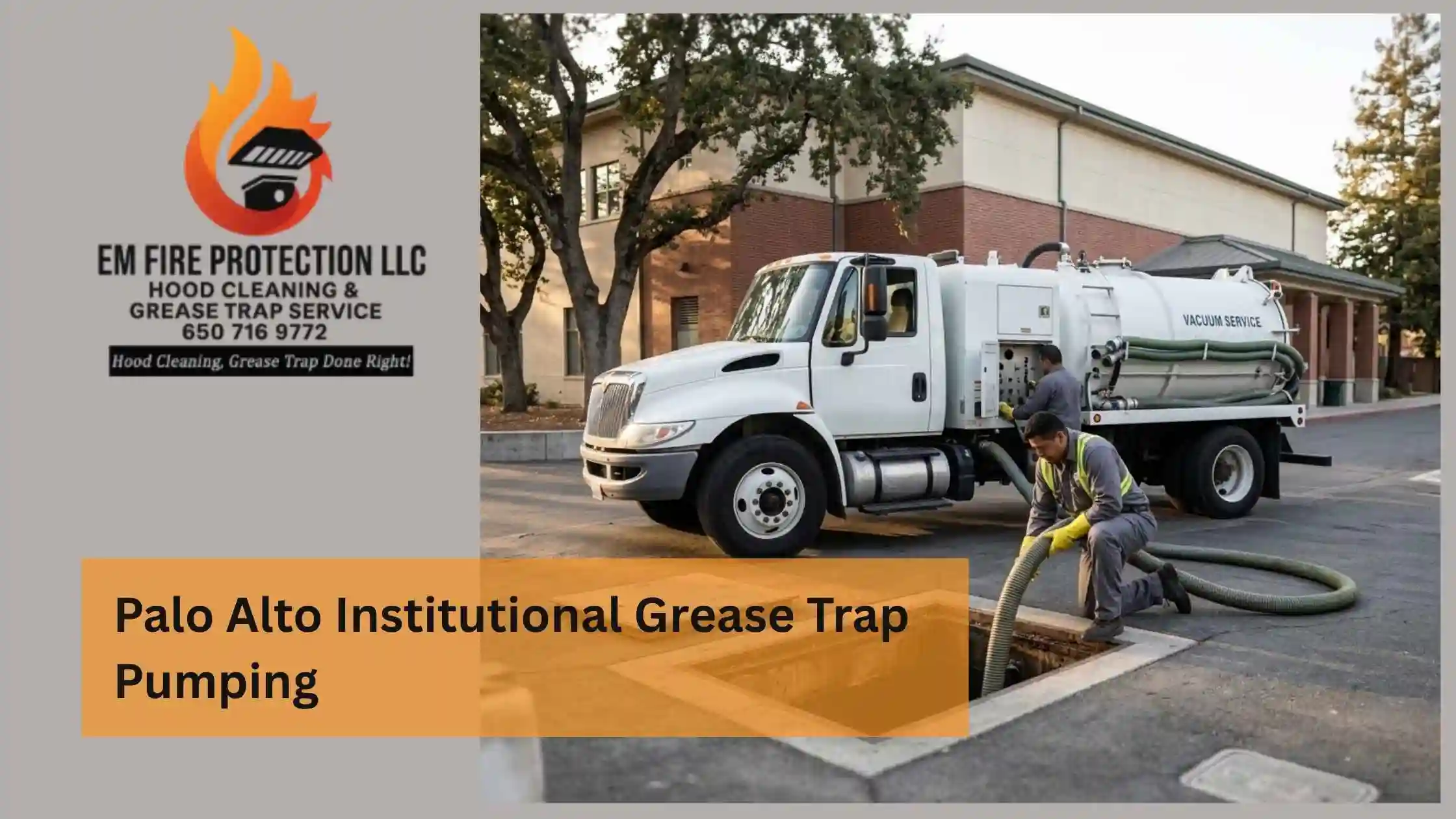
The service team inspected the system, accessed the grease trap using the appropriate equipment, and removed the accumulated grease and waste. Once the material was pumped out, the trap could function properly again, and the facility could return to normal kitchen operations.
The experience also showed the facility manager why waiting for a complete backup was unnecessary. A planned maintenance schedule could address the buildup before it disrupted daily food service.
The Professional Advantage of Grease Trap Pumping
Grease trap pumping is more than simply removing visible grease. Institutional systems can contain heavy, compacted layers of fats, oils, grease, food solids, and wastewater that require appropriate equipment and handling procedures.
Professional technicians have the equipment needed to access the trap, pump out accumulated contents, and manage the waste safely. They can also identify conditions that may indicate a developing drainage or maintenance problem.
Specialized Pumping Equipment
A commercial or institutional grease trap can hold substantially more material than a residential kitchen drain. Manual cleaning is not a practical solution for heavy accumulation.
Professional pumping equipment is designed to remove large quantities of grease and waste efficiently. This helps minimize disruption to the facility and allows the kitchen to resume normal operation as quickly as possible.
Proper Waste Removal
Grease trap contents should not simply be poured into another drain or disposed of through ordinary waste channels. Pumped material requires appropriate handling and disposal.
Professional service helps ensure that collected grease and wastewater are managed through proper procedures rather than creating another environmental or plumbing problem.
Identifying Problems Early
An experienced technician can recognize signs of excessive buildup, damaged components, unusual odors, or other conditions that may require additional attention.
This is especially important for institutional facilities because a small drainage issue can quickly become an operational problem when multiple kitchen areas depend on the same wastewater system.
Why DIY Grease Trap Cleaning Can Backfire
Institutional grease traps are not comparable to a small household drain. The quantity of grease and solid material can make cleaning messy, difficult, and potentially unsafe without the correct equipment.
Trying to remove heavy grease manually can also leave material behind. Partial cleaning may temporarily reduce the problem while allowing buildup to continue inside the trap.
Another concern is waste handling. Removing grease is only part of the job. The collected material must also be handled appropriately.
For facility managers, professional Grease Trap Pumping provides a more controlled maintenance solution while reducing the risk of unnecessary plumbing disruptions.
Supporting Better Kitchen Operations

A grease trap is an important part of an institutional kitchen’s wastewater system. When it becomes overloaded, the effects can reach beyond the plumbing.
A blocked or poorly maintained system can contribute to:
- Kitchen downtime
- Unpleasant working conditions
- Drainage interruptions
- Emergency plumbing calls
- Cleanup requirements
- Disruption to meal preparation
Routine maintenance allows facility managers to address grease accumulation before it becomes an emergency.
For schools and other institutions, this proactive approach is particularly valuable because kitchen operations often follow strict schedules. A drainage backup during meal preparation can affect staff, students, residents, patients, or other people who rely on the facility.
Building a Preventive Maintenance Schedule
There is no single schedule that works for every institutional kitchen. The appropriate frequency depends on factors such as kitchen size, meal volume, equipment usage, and the amount of grease entering the wastewater system.
Facilities with high-volume food preparation may need more frequent service than smaller operations.
Rather than waiting for odors or backups to appear, facility managers can work with a professional service provider to establish a maintenance schedule based on actual operating conditions.
Consistent Grease Trap Pumping can help keep the system operating efficiently and reduce the likelihood of unexpected problems.
Professional Grease Trap Pumping in Palo Alto
Institutional kitchens cannot afford to treat grease buildup as an occasional inconvenience. High-volume cooking and dishwashing can place continuous demands on grease traps and wastewater systems.
Professional service provides the specialized pumping equipment, experience, and waste-handling procedures needed to deal with accumulated grease effectively. It also gives facility managers an opportunity to identify potential problems before they interfere with kitchen operations.
Whether you manage a school cafeteria, healthcare facility, assisted-living kitchen, institutional dining operation, or another high-volume food-service facility in Palo Alto, professional maintenance can help protect your drainage system and keep daily operations moving.
FAQs About Institutional Grease Trap Pumping
How often should an institutional grease trap be pumped?
The appropriate frequency depends on the size of the trap, kitchen usage, meal volume, and grease accumulation. A professional inspection can help establish a suitable maintenance schedule.
What happens if a grease trap is not pumped?
Grease and solids can continue accumulating until the trap loses capacity. This may contribute to odors, slow drainage, backups, and other plumbing problems.
Can staff clean an institutional grease trap themselves?
DIY cleaning is generally impractical for heavily used institutional systems. Professional equipment is designed to remove large quantities of accumulated grease and waste more effectively.
Does pumping remove all grease buildup?
Professional pumping removes accumulated contents from the trap. A technician can also assess the condition of the system and identify whether additional cleaning or maintenance is needed.
Why choose professional service?
Professional technicians have the equipment and experience needed to service larger grease traps while managing removed material appropriately. This helps reduce disruption and supports ongoing kitchen maintenance.
Schedule Grease Trap Pumping in Palo Alto
Don’t wait for a grease buildup problem to become a kitchen shutdown. Professional Grease Trap Pumping can help Palo Alto institutions maintain their grease traps, reduce the risk of backups, and support reliable kitchen operations.
Contact EM Fire Protection to schedule professional grease trap cleaning and request service for your Palo Alto institutional facility.