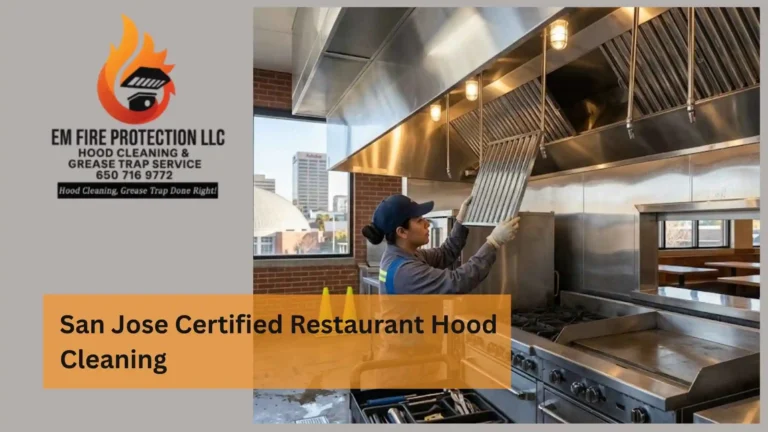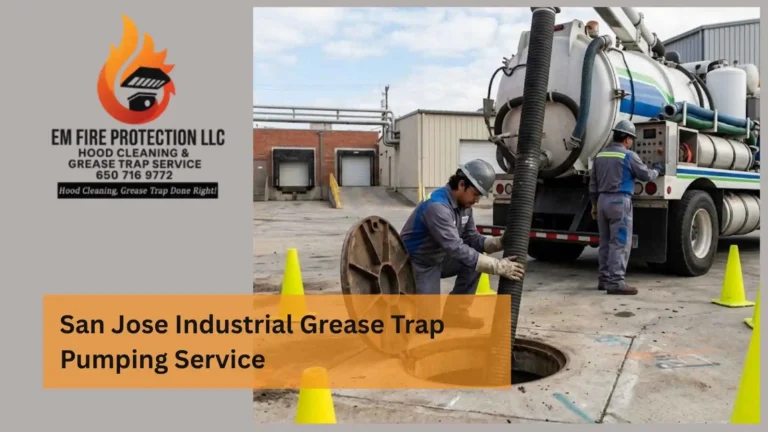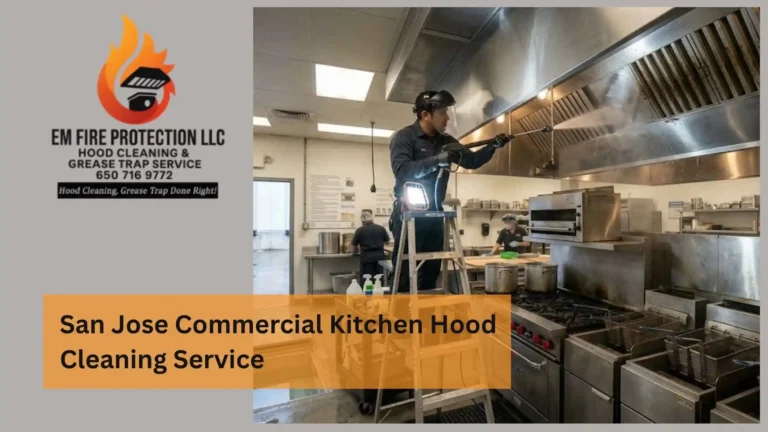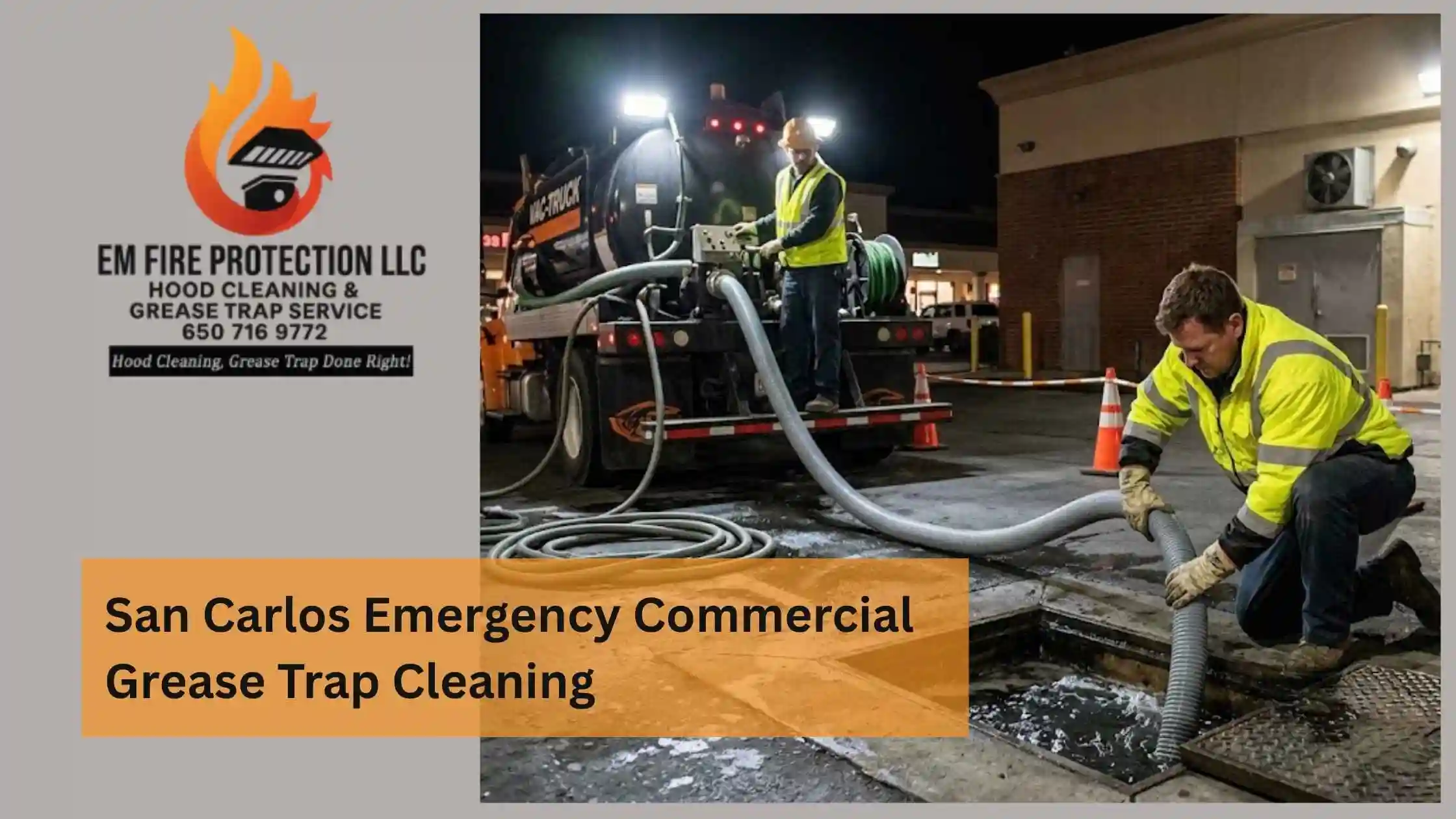
Commercial kitchens in San Carlos operate under constant pressure. Restaurants, hotels, cafeterias, and food service facilities generate large amounts of fats, oils, and grease (FOG) every day. Without proper grease trap maintenance, these materials accumulate rapidly, creating serious plumbing and sanitation problems.
In busy food-service environments, a grease trap failure can quickly become an emergency. Overflowing grease traps, blocked drains, foul odors, and wastewater backups can disrupt operations, create health code concerns, and even force temporary closures.
Professional services such as EM Fire Protection Grease Trap Cleaning help commercial kitchens maintain safe, compliant, and fully operational grease management systems.
Why Emergency Grease Trap Cleaning Matters
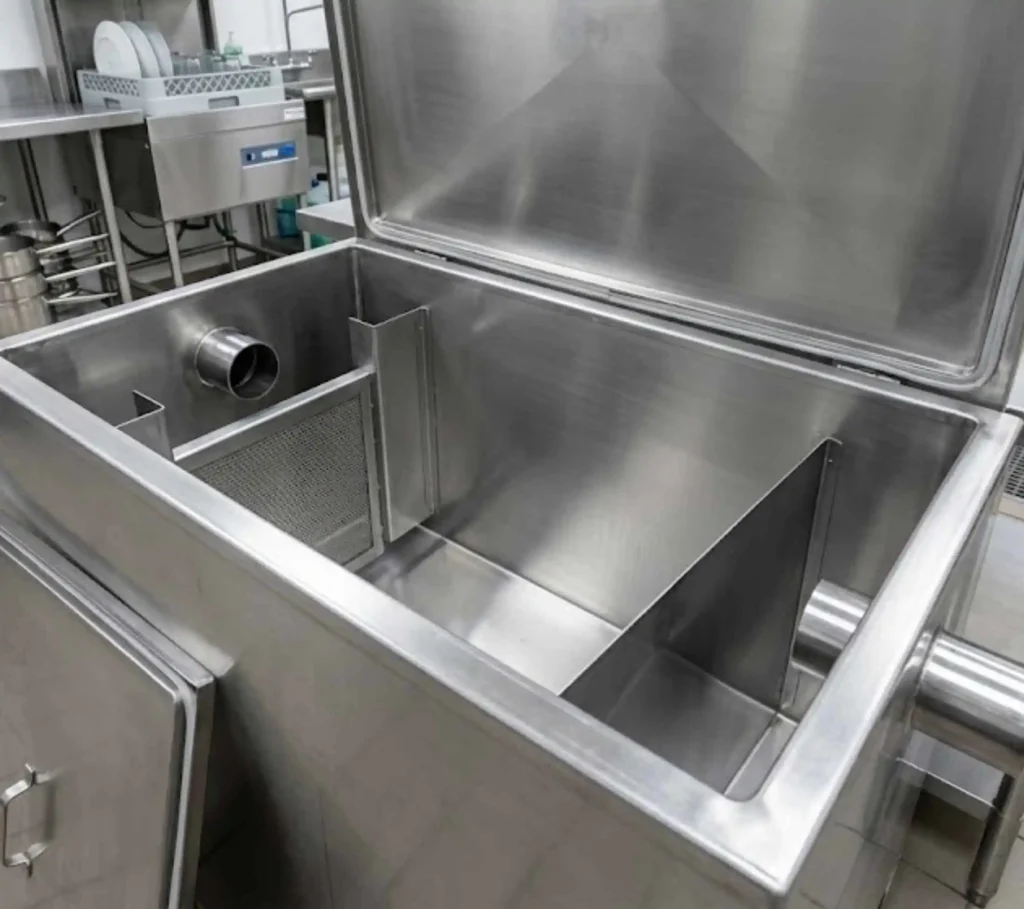
Grease traps are designed to separate fats, oils, grease, and food solids from wastewater before they enter the sewer system.
When grease traps become overloaded, several problems can develop:
- Slow-draining sinks
- Sewage backups
- Strong kitchen odors
- Overflowing grease traps
- Plumbing blockages
- Health inspection violations
- Business interruptions
California municipalities and sewer systems require businesses to properly maintain grease traps to reduce sewer blockages and environmental contamination. Routine cleaning helps prevent emergency situations before they impact operations.
Job Story: Emergency Service Saves a Busy Restaurant
A restaurant in the San Carlos area experienced a sudden kitchen drainage problem during a busy weekend dinner service. Multiple floor drains began backing up, and staff noticed strong odors coming from the dishwashing area.
The restaurant initially assumed it was a minor plumbing issue. However, an emergency inspection revealed that the grease interceptor was nearly full of accumulated grease and food waste.
The emergency cleaning team responded quickly and performed:
- Full grease trap pumping
- Removal of accumulated sludge
- Cleaning of internal trap components
- Inspection of baffles and flow systems
- Disposal of collected waste following regulations
After cleaning, drainage returned to normal and the restaurant avoided a potential shutdown during one of its busiest service periods.
Situations like this are common in high-volume kitchens where grease accumulates faster than expected. Regular maintenance significantly reduces the risk of these emergencies.
Common Signs Your Grease Trap Needs Immediate Service
Commercial kitchens often receive warning signs before a major failure occurs.
Slow Drains
If sinks and floor drains begin draining slowly, grease buildup may already be restricting flow.
Persistent Odors
Strong foul smells often indicate excessive grease and food waste accumulation inside the trap.
Water Backups
Water backing up into sinks or floor drains can signal a trap that has reached capacity.
Gurgling Sounds
Airflow restrictions caused by grease blockages often create unusual plumbing noises.
Overflowing Grease Trap
An overflowing trap requires immediate professional attention to prevent contamination and operational disruption.
These are among the most common indicators that emergency grease trap cleaning is needed.
Why San Carlos Restaurants Face Grease Challenges
Restaurants and food-service businesses generate large volumes of grease every day.
High-risk facilities include:
- Restaurants
- Fast-food locations
- Hotels
- Cafeterias
- Food courts
- Catering facilities
- Bakeries
- Healthcare kitchens
The more food production a facility handles, the faster grease accumulates within the trap system.
Without scheduled pumping and cleaning, even properly installed systems eventually experience reduced capacity and drainage issues.
Professional Grease Trap Cleaning Process
Professional grease trap cleaning involves much more than simply removing visible waste.
Initial Inspection
Technicians evaluate grease levels, identify blockages, and inspect system components.
Complete Pump-Out
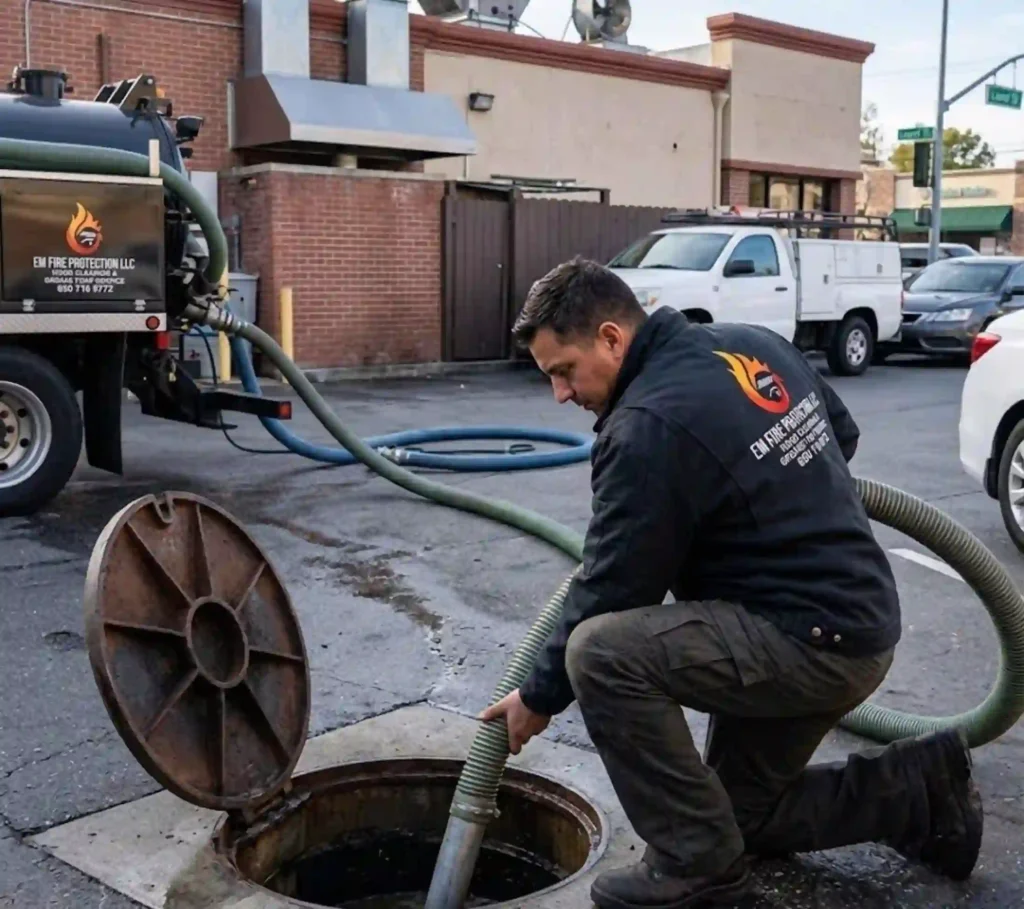
Vacuum equipment removes grease, wastewater, and solid food waste from the trap.
Internal Cleaning
Walls, baffles, and internal surfaces are cleaned to remove remaining buildup.
System Evaluation
Professionals check for damaged components, leaks, or operational issues.
Proper Waste Disposal
Collected grease waste must be transported and disposed of according to environmental regulations.
This thorough process helps restore full system capacity and reduce future problems.
Why DIY Grease Trap Cleaning Is Risky
Some operators attempt to manage grease buildup internally.
However, commercial grease trap cleaning requires specialized equipment, safety procedures, and regulatory compliance.
Incomplete Waste Removal
Manual cleaning often leaves behind sludge and grease deposits.
Health and Safety Risks
Grease waste contains bacteria, odors, and contaminants that require proper handling.
Environmental Compliance Issues
Improper disposal can violate local regulations.
Missed Mechanical Problems
Professionals identify damaged baffles, leaks, and structural issues during inspections.
Community discussions consistently emphasize that professional grease trap service helps prevent costly repairs, downtime, and recurring drainage problems.
Preventing Health Code Violations
Health inspectors frequently evaluate grease management systems during inspections.
Poorly maintained grease traps can contribute to:
- Sanitation violations
- Drainage failures
- Odor complaints
- Wastewater issues
- Regulatory penalties
Routine cleaning helps restaurants maintain compliance while protecting staff and customers.
Benefits of Emergency Grease Trap Cleaning Services
Fast-response grease trap services provide several advantages:
- Reduced operational downtime
- Faster restoration of kitchen functions
- Prevention of plumbing damage
- Lower risk of emergency closures
- Improved sanitation conditions
- Better compliance management
For busy commercial kitchens, rapid service can prevent a small issue from becoming a major business disruption.
Local Commercial Cleaning Services
Businesses looking for professional grease management services can explore providers such as Grease Trap Cleaners, LLC, which offers grease trap cleaning services for commercial facilities. Proper maintenance helps reduce plumbing risks and supports kitchen compliance requirements.
Conclusion
Emergency grease trap issues can quickly disrupt restaurant operations, create sanitation concerns, and lead to expensive repairs. In a busy commercial kitchen environment, proper grease management is essential for maintaining smooth operations and avoiding costly downtime.
Regular pumping, inspections, and professional cleaning help prevent backups, odors, and health code violations before they become emergencies. Businesses throughout San Carlos can protect their kitchens, staff, and customers through proactive grease trap maintenance and fast-response emergency cleaning services.
For commercial grease trap pumping, maintenance, and emergency cleaning solutions, businesses can learn more through EM Fire Protection Services.
Call to Action
If your restaurant or commercial kitchen is experiencing slow drains, grease odors, or backup issues, contact EM Fire Protection Grease Trap Cleaning Services today to schedule emergency service, request a quote, and keep your kitchen operating safely and efficiently.