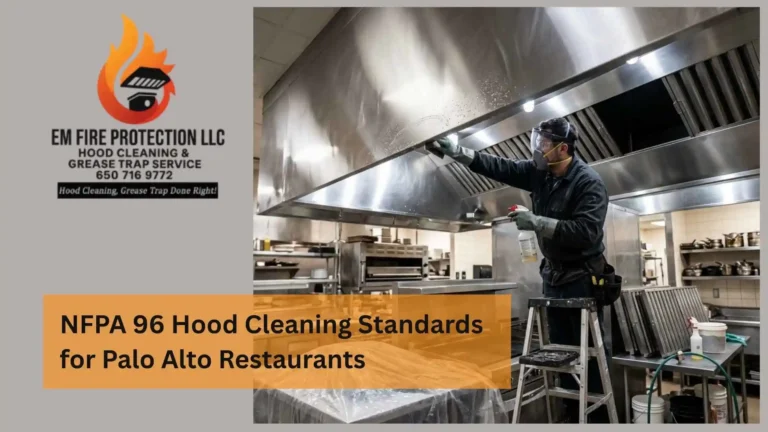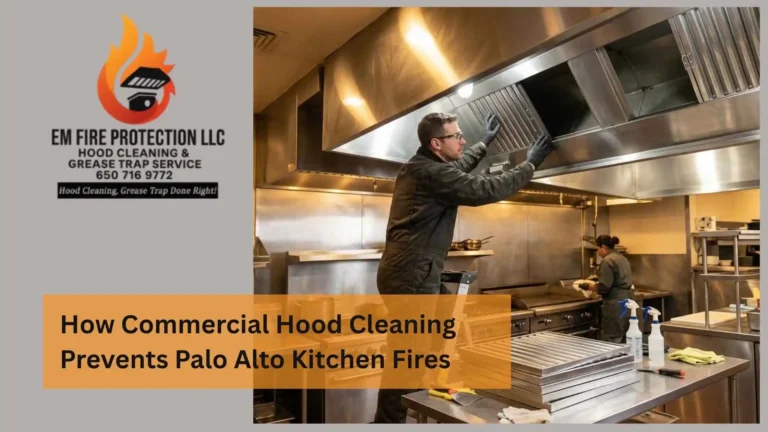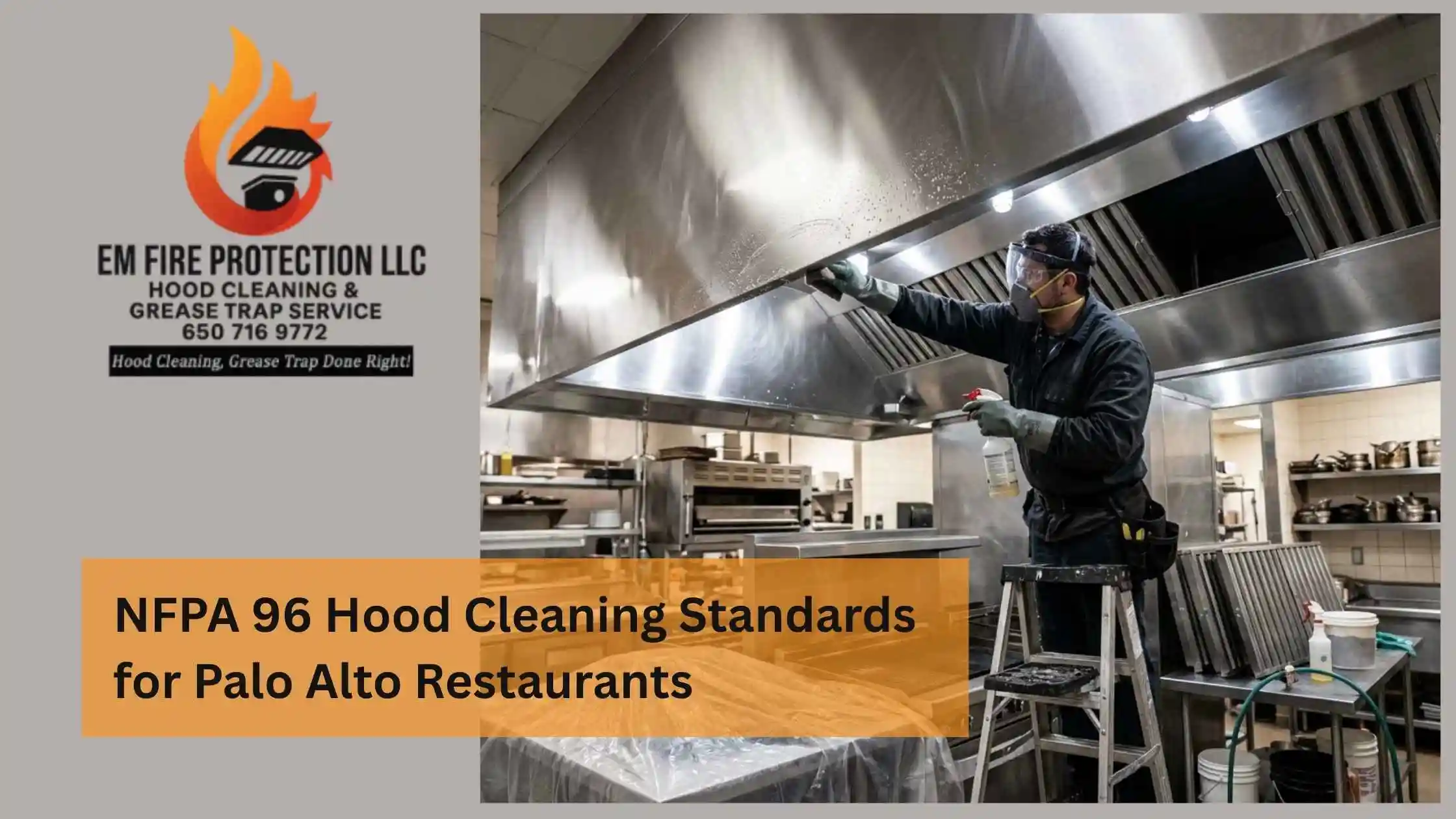
Palo Alto restaurants depend on safe, well-maintained commercial kitchens to serve customers efficiently. However, cooking produces grease-laden vapors that can leave combustible deposits inside exhaust hoods, filters, ducts, and fans. NFPA 96 provides widely used standards for ventilation control and fire protection in commercial cooking operations, making proper exhaust system maintenance an important part of restaurant fire prevention.
For restaurants in Palo Alto, cleaning the visible hood surface is not enough. Grease can collect in concealed parts of the exhaust system, where it may remain unnoticed until a routine inspection or maintenance visit reveals the buildup. Professional hood cleaning helps remove this combustible residue and supports the proper operation of the exhaust system. EM Fire Protection LLC provides commercial kitchen hood cleaning in Palo Alto and surrounding Bay Area communities, with a process that includes inspection, grease removal, cleaning of accessible exhaust components, and post-service checks.
What Is NFPA 96 and Why Does It Matter?
NFPA 96 is a standard published by the National Fire Protection Association covering ventilation control and fire protection for commercial cooking operations. It addresses important aspects of commercial kitchen exhaust systems, including grease removal, inspection, cleaning, and fire-safety considerations.
Restaurants generate grease, smoke, heat, and airborne particles as food is prepared. The exhaust hood captures these emissions and directs them through filters and ductwork toward an exhaust fan. Although filters capture some grease, residue can still accumulate on other surfaces throughout the system.
When grease deposits are allowed to build up, they provide fuel that can contribute to a fire spreading through the exhaust system. Following applicable NFPA 96 requirements helps restaurant operators manage this risk and maintain their kitchen exhaust equipment.
The specific requirements that apply to a restaurant depend on its cooking operations, exhaust system, adopted codes, and local authority having jurisdiction. Restaurant owners should confirm applicable requirements with qualified service providers and local fire officials rather than assuming that one cleaning schedule fits every kitchen.
How Grease Buildup Creates a Fire Hazard
Grease accumulation develops gradually during normal cooking. Frying, grilling, roasting, and other high-heat activities release airborne grease that travels into the exhaust hood and ductwork.
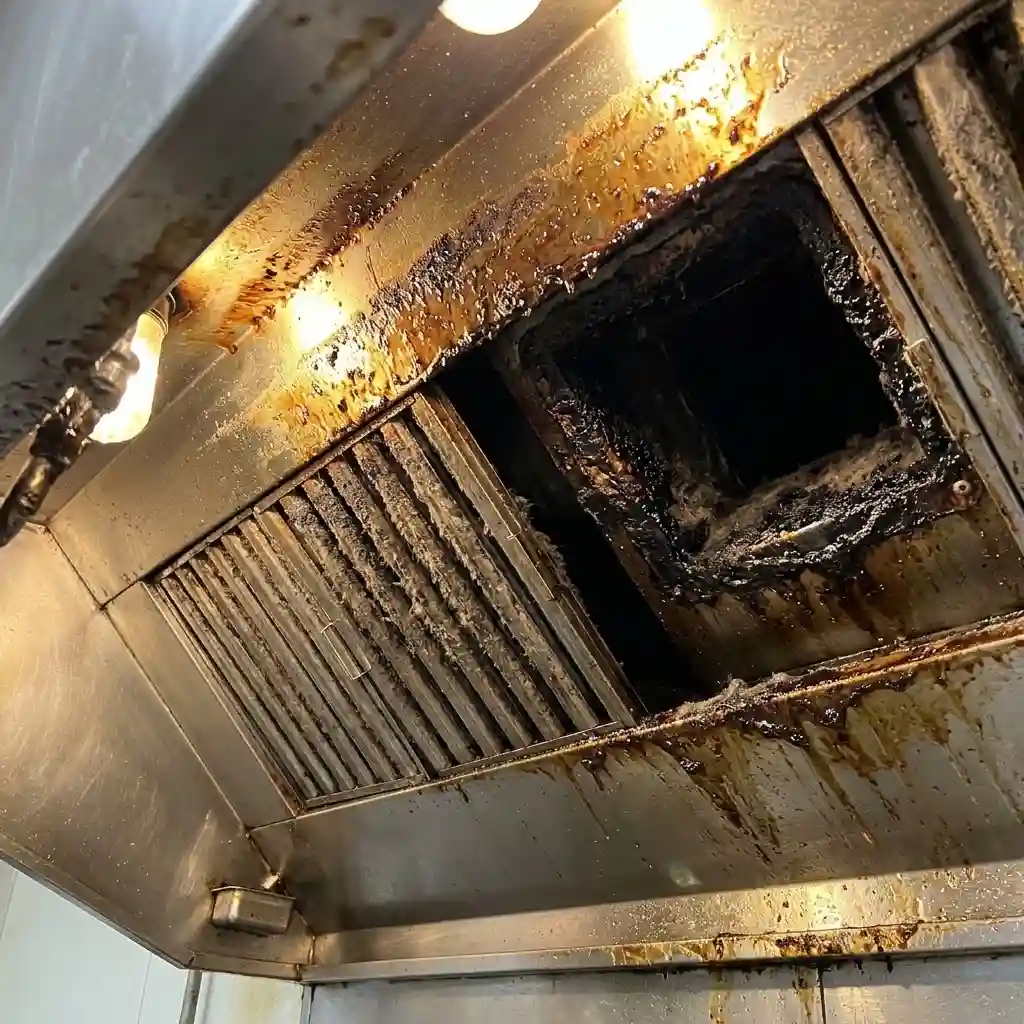
Some residue remains on filters and the hood canopy, while other grease reaches the plenum, duct interiors, and exhaust fan. If these components are not cleaned as required, deposits may become thick and difficult to remove.
A cooking fire can become more dangerous when flames reach grease inside the exhaust system. The combustible residue may allow fire to spread beyond the immediate cooking equipment, threatening kitchen staff, customers, the building, and neighboring properties.
Palo Alto restaurants should therefore treat exhaust cleaning as a planned fire-prevention measure rather than a cosmetic service. Removing accumulated grease reduces the available fuel within the system, although it does not eliminate every fire risk or replace other required safety measures.
Which Parts of a Kitchen Exhaust System Need Cleaning?
A comprehensive hood cleaning service addresses the areas where grease accumulates, not just the surfaces visible to kitchen staff. The cleaning scope depends on the system’s design, accessibility, and condition.
Hood Canopy and Grease Filters
The hood canopy captures cooking emissions, while grease filters remove some airborne grease before it enters the ductwork. Both can accumulate residue during normal kitchen operations.
Cleaning these components helps control buildup near cooking equipment. Removable filters should be handled and cleaned appropriately, then reinstalled correctly after service.
Plenum and Exhaust Ducts
The plenum sits behind the filters, and the ductwork carries exhaust air toward the fan. These areas can accumulate grease that is difficult to see during routine kitchen cleaning.
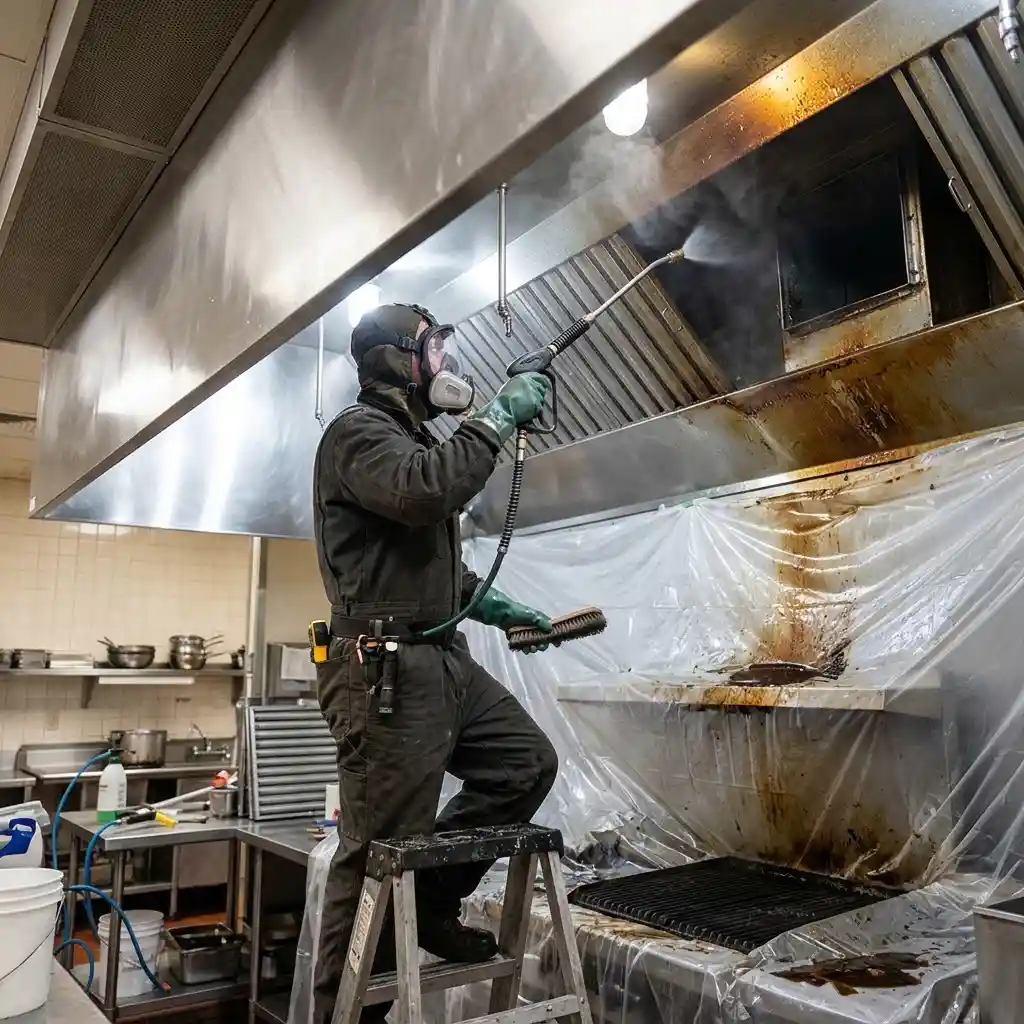
Professional technicians use suitable tools and cleaning methods to address accessible surfaces throughout the exhaust pathway. Cleaning only the filters and outer hood may leave significant grease deposits untreated.
Exhaust Fans and Rooftop Areas
Grease can also collect on exhaust fan components and around rooftop equipment. Accumulation may affect cleanliness and can create additional maintenance concerns.
EM Fire Protection LLC describes a process that includes degreasing accessible duct interiors and exhaust fans, paying attention to rooftop areas, and protecting roofing materials from cleaning runoff. After cleaning, technicians reassemble filters and check fan operation and airflow.
How Often Should Palo Alto Restaurants Schedule Hood Cleaning?
The appropriate cleaning frequency depends on the type and volume of cooking, operating hours, equipment, and the rate at which grease accumulates. A restaurant that regularly fries food or operates a high-volume cooking line may require more frequent cleaning than a kitchen with lighter cooking activity.
NFPA 96 includes inspection and cleaning provisions based on cooking operations and grease accumulation. Restaurant owners should consult the applicable edition of the standard, local requirements, and a qualified hood cleaning professional to determine the schedule for their specific exhaust system.
Managers should not rely on visible grease alone to decide when service is needed. Deposits can accumulate inside ducts and other concealed components before they become obvious from the cooking area.
A practical maintenance plan should include:
- Reviewing the cooking operation and required cleaning frequency.
- Monitoring grease buildup in filters, hoods, and accessible components.
- Scheduling professional service before deposits become excessive.
- Keeping records of completed cleaning and any identified issues.
- Addressing damaged components or access problems promptly.
EM Fire Protection LLC offers flexible scheduling and helps commercial kitchens establish an appropriate cleaning interval based on their operations. Scheduling service outside normal cooking hours can also help reduce disruption.
Why Professional Hood Cleaning Matters for Compliance
NFPA 96 compliance involves more than making a kitchen hood look clean. The relevant exhaust system components must be addressed according to the applicable requirements, and restaurants must also maintain other fire-safety measures.
Professional hood cleaning helps restaurant managers address grease buildup in areas that ordinary kitchen cleaning cannot easily reach. It can also help identify issues that require follow-up, such as worn gaskets, loose fan belts, damaged components, or access limitations.
EM Fire Protection LLC begins its service with an inspection of the exhaust system. Its technicians identify grease levels and access points, protect surrounding cooking equipment, and use mechanical scraping and food-service-approved degreasers where appropriate. After cleaning, the company documents the service with a cleaning-date sticker and can provide photographs for maintenance records, inspectors, or insurance documentation.
Service documentation can help demonstrate that maintenance has been performed, but it does not automatically certify that an entire restaurant complies with every applicable fire code. Restaurant operators should address any findings and maintain separate required inspections and servicing for fire suppression equipment.
Why DIY Hood Cleaning Is Not Enough
Restaurant employees can help maintain visible surfaces and removable filters as part of daily kitchen routines. However, these tasks do not replace the professional cleaning that may be required for the complete exhaust system.
Grease can collect in duct interiors, plenums, and exhaust fans that are difficult to access without suitable equipment and training. Attempting to clean these areas without proper procedures can leave deposits behind or create safety and contamination concerns.
Professional technicians use specialized tools and cleaning products to remove stubborn grease while protecting nearby equipment and surfaces. They can also identify maintenance issues that may otherwise go unnoticed.
For Palo Alto restaurants, using a qualified service provider can make it easier to manage scheduled maintenance, retain service documentation, and plan around kitchen operating hours. Owners should confirm the provider’s experience, service scope, and ability to address their specific exhaust system.
An Illustrative Hood Cleaning Scenario
Imagine a busy Palo Alto restaurant that prepares fried and grilled dishes throughout the week. Staff members regularly clean the cooking area and removable filters, but grease gradually accumulates in the plenum, ducts, and exhaust fan.
During a maintenance review, the restaurant manager recognizes that visible cleaning alone does not address the entire exhaust system. The restaurant schedules professional hood cleaning to remove accumulated deposits and identify any issues requiring additional attention.
The technicians inspect the system, protect nearby equipment, clean the relevant accessible components, and check fan operation and airflow after the work is completed. The manager retains the service documentation and reviews the recommended interval for the next cleaning.
This is an illustrative scenario, not a verified EM Fire Protection customer case. It demonstrates how planned maintenance can help restaurants address combustible grease buildup before it becomes a more serious concern.
Support Restaurant Fire Safety With EM Fire Protection LLC
Commercial kitchens need consistent maintenance to manage grease buildup and support safe cooking operations. Understanding NFPA 96 helps restaurant owners recognize why exhaust cleaning is a key part of fire prevention, but the specific requirements should always be checked against the applicable standard and local codes.
EM Fire Protection LLC provides commercial hood cleaning for restaurants and food-service facilities in Palo Alto and surrounding Bay Area communities. Its service includes inspection, grease removal, cleaning of accessible hood and exhaust components, post-cleaning checks, and documentation.
To discuss your restaurant’s exhaust system or request a quote, call 650-716-9772 or visit EM Fire Protection’s official hood cleaning service page. Regular professional maintenance can help reduce combustible grease deposits and support a safer commercial kitchen.