California restaurant owners face strict fire safety expectations because commercial kitchens combine high-temperature cooking equipment, grease-producing operations, and ventilation systems that can create serious fire hazards. Grease buildup inside exhaust hoods, filters, ducts, and nearby components can become highly combustible if maintenance is neglected. During inspections, Fire Marshals may evaluate whether the kitchen’s fire protection systems, ventilation arrangements, cleanliness, and maintenance practices are appropriate and compliant with applicable requirements. Understanding these inspection priorities helps restaurant owners identify problems early, maintain safer kitchen environments, and reduce the risk of costly violations or fire incidents.
1. Grease Buildup Inside the Hood and Exhaust System
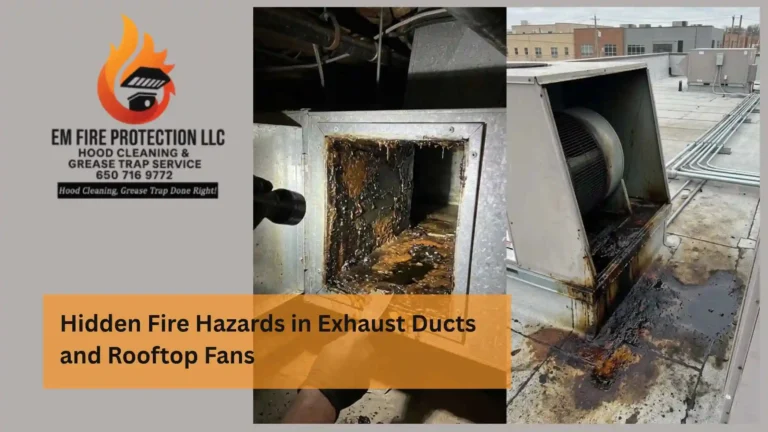
One of the most important concerns during a commercial kitchen inspection is grease accumulation. Cooking produces grease-laden vapors that travel through the hood, filters, plenum, ductwork, and exhaust fan. Over time, residue accumulates on these surfaces and creates combustible deposits.
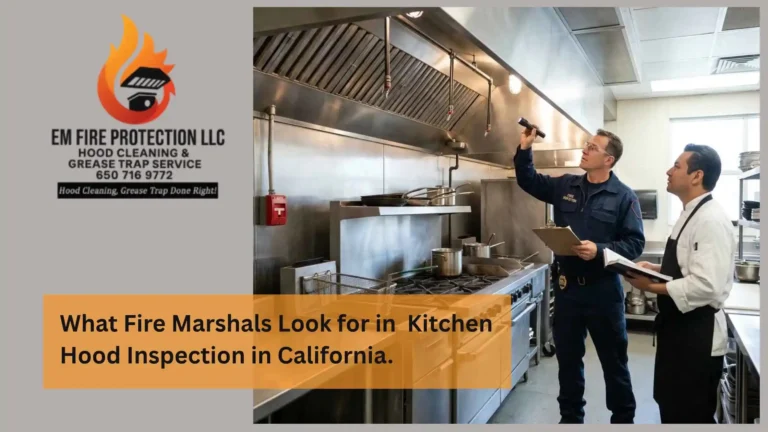
Fire Marshals may look for visible grease, neglected cleaning, blocked grease-removal devices, and evidence that the exhaust system has not been properly maintained.
Common problem areas include:
- Hood canopy and interior surfaces.
- Grease filters and filter housing.
- Plenum area above filters.
- Horizontal and vertical exhaust ductwork.
- Exhaust fan blades and surrounding components.
- Areas around cooking equipment where grease accumulates.
Cleaning only the visible hood surface is not enough. Grease hidden inside ducts or around exhaust fans can remain a serious fire hazard even when the kitchen looks clean.
California fire code requires commercial cooking exhaust systems to be inspected and cleaned at intervals appropriate to the cooking operation, with inspection performed by qualified individuals.
2. Grease Filters and Proper Ventilation
Grease filters are designed to capture grease particles before they travel deeper into the exhaust system. During an inspection, Fire Marshals may check whether filters are installed correctly, in good condition, and suitable for the hood system.
Missing, damaged, poorly fitted, or excessively dirty filters can affect ventilation performance and allow grease to accumulate in downstream components.
Inspectors may also evaluate whether the exhaust hood is functioning properly and whether the ventilation system operates as required when commercial cooking equipment is in use.
California fire code requires approved grease filters to be in place and the hood ventilation system to operate at the required rate of air movement.
3. Fire Suppression System Condition and Accessibility
A commercial kitchen hood is not just a ventilation system. It is also part of the kitchen’s fire protection arrangement.
Fire Marshals may check whether the automatic fire suppression system is present where required, appropriately installed, maintained, and accessible. They may also verify that system components are not obstructed by grease, equipment, or improperly positioned items.
Important areas include:
- Suppression nozzles positioned over cooking equipment.
- Manual activation pull stations.
- System inspection and maintenance records.
- Accessible suppression equipment.
- Proper coverage of cooking appliances.
- Required connections or shutdown functions.
California’s fire code requires commercial cooking equipment producing grease-laden vapors to have a Type I hood and an appropriate automatic fire-extinguishing system. Applicable requirements also address manual system operation and installation.
4. Exhaust Fans, Duct Access, and Hidden Grease
Exhaust fans help remove smoke, heat, and grease-laden vapors from the kitchen. If grease accumulates on fan components or inside ducts, it may create a fire hazard and interfere with system performance.
Inspectors may look for signs of neglected cleaning, improperly maintained components, and access problems that make inspection or maintenance difficult.
Professional hood cleaning includes examining accessible exhaust components, checking fan condition, and identifying maintenance concerns such as worn belts, damaged access panels, or excessive buildup.
EM Fire Protection LLC’s hood cleaning process includes inspecting access panels, grease levels, fan components, and worn gaskets before cleaning. Its service addresses the hood canopy, filters, plenum, accessible duct runs, and exhaust fans.
5. Grease Interceptor and Grease Trap Maintenance
While a grease interceptor or grease trap is not the same as a kitchen hood fire suppression system, it remains an important part of commercial kitchen maintenance. It captures fats, oils, and grease (FOG) before they enter plumbing and sewer lines.
Neglected grease traps can create problems that affect kitchen sanitation and daily operations, including slow drains, foul odors, blockages, and wastewater backups. Although these issues are generally associated with plumbing and health requirements rather than hood fire inspections, they can indicate poor overall maintenance.
EM Fire Protection LLC provides grease trap cleaning services that include:
- Inspecting the trap and checking accumulated grease levels.
- Removing grease, solids, and wastewater using vacuum equipment.
- Cleaning interior walls, baffles, and trap components.
- Flushing connecting lines to help reduce downstream blockages.
- Disposing of waste according to applicable environmental requirements.
- Providing service records upon request.
Keeping grease traps maintained helps commercial kitchens operate efficiently, avoid plumbing disruptions, and maintain a cleaner working environment.
6. Inspection Tags, Cleaning Records, and Maintenance Documentation
Commercial kitchen owners should never overlook service documentation. During an inspection, records can help demonstrate that hood cleaning and fire protection maintenance have been completed as required.
Fire Marshals may review documentation such as:
- Hood cleaning dates and service records.
- Cleaning company and technician details.
- Inspection reports and identified deficiencies.
- Fire suppression system maintenance records.
- Recommendations for the next cleaning or inspection.
- Evidence that previously identified problems were corrected.
California fire code requires records of exhaust system inspections and cleanings to identify the service provider, describe the inspection or cleaning, and include the date. Records must be maintained.
Maintaining accurate records helps restaurant managers track maintenance schedules, identify recurring problems, and demonstrate that they are taking fire safety seriously.
7. Required Hood Inspection and Cleaning Frequency
Inspection frequency depends on cooking volume, equipment, fuel type, and the applicable fire code. Different commercial kitchens may require different maintenance intervals.
Typical California Fire Code inspection intervals include:
| Type of cooking operation | Inspection frequency |
|---|---|
| High-volume cooking, such as 24-hour cooking, charbroiling, or wok cooking | Every 3 months |
| Solid-fuel cooking appliances | Every 1 month |
| Other commercial cooking operations | Every 6 months |
| Low-volume operations, such as seasonal facilities or senior centers | Every 12 months |
These are inspection intervals, not a guarantee that cleaning is needed only at those times. If grease buildup is found, cleaning is required. Local fire authorities may approve or require different intervals based on the conditions. codes.
Restaurant owners should have their specific maintenance schedule confirmed by the local authority having jurisdiction and qualified service providers.
Job Story: Preparing a California Restaurant for a Fire Inspection
Imagine a busy California restaurant preparing for an upcoming fire inspection. The kitchen staff cleans cooking surfaces, wipes the hood exterior, and washes removable filters regularly. However, management has not scheduled a professional exhaust system cleaning recently.
During a maintenance review, the owner discovers grease accumulating inside the hood, around the plenum, and within accessible exhaust duct sections. The exhaust fan also shows signs of grease buildup, and service documentation is incomplete.
Concerned about inspection readiness and fire safety, the restaurant contacts EM Fire Protection LLC for professional hood cleaning.
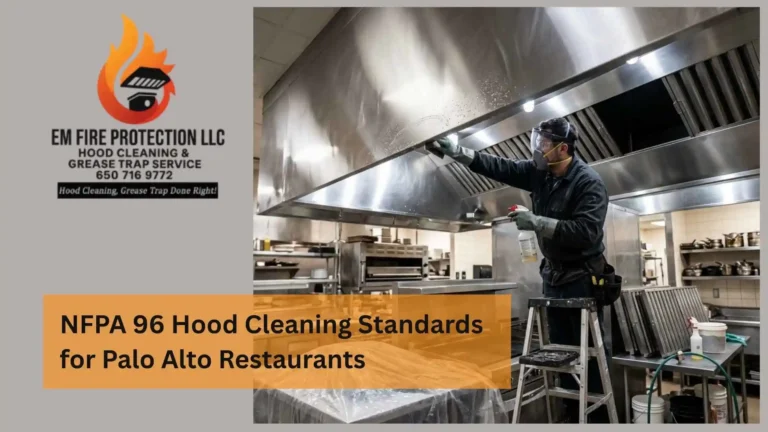
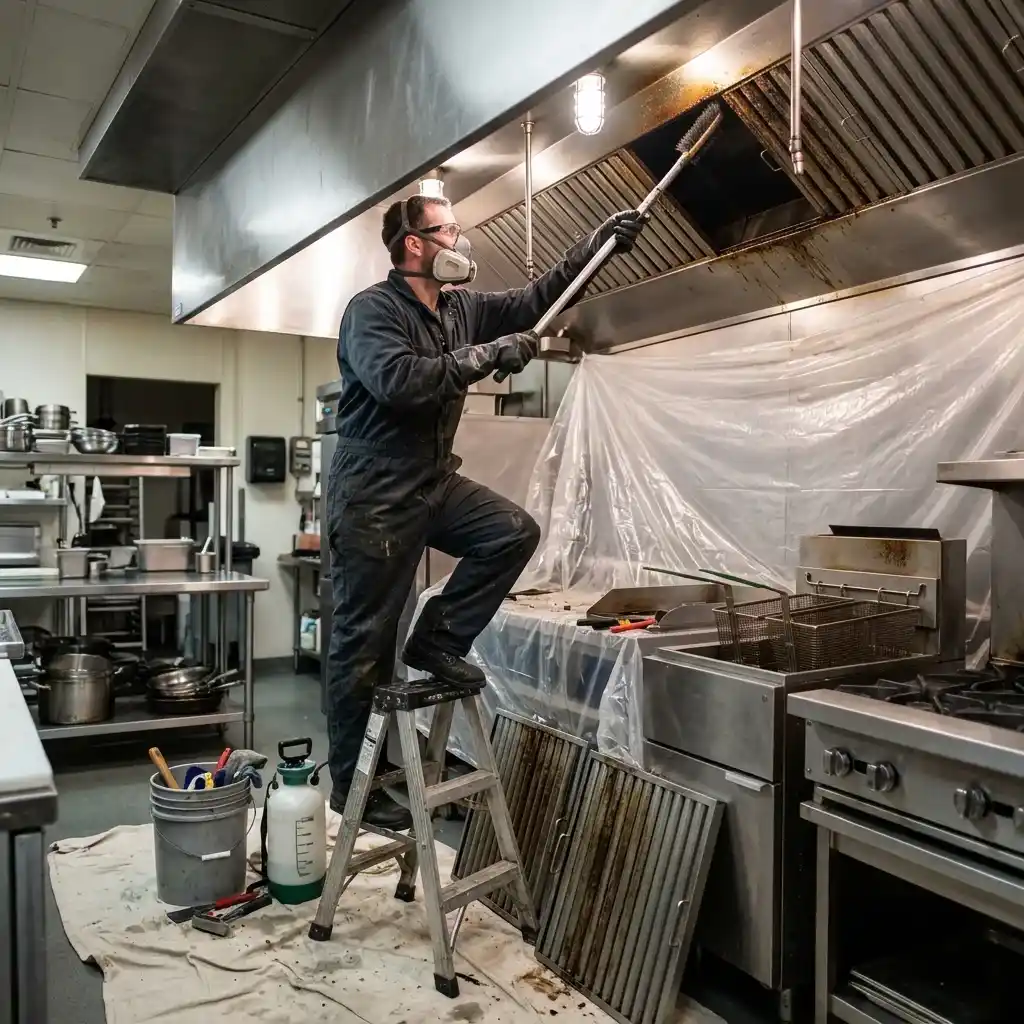
Technicians inspect the system, identify grease accumulation, check access points, and examine the exhaust fan components. They protect nearby equipment, remove heavy deposits, clean filters and accessible exhaust areas, and verify fan operation after service. The restaurant also receives maintenance documentation to help track future service.
The owner subsequently establishes a maintenance schedule based on cooking volume and system condition, helping reduce the likelihood of neglected grease buildup.
This is an illustrative scenario based on common commercial kitchen maintenance problems, not a verified customer testimonial.
Professional Advantage: Why Hood Cleaning Is Not a DIY Job
Cleaning a commercial kitchen hood properly requires specialized equipment, experience, and access to areas that kitchen employees may not be able to reach safely.
Professional Equipment for Deep Grease Removal
Ordinary kitchen cleaning products cannot effectively remove every layer of hardened grease inside commercial exhaust systems. Professional technicians use specialized degreasers, scraping tools, and cleaning equipment designed for commercial exhaust maintenance.
EM Fire Protection uses mechanical scraping, professional degreasers, and high-pressure rinsing to remove grease deposits from accessible exhaust components.
Access to Hidden Areas
Grease accumulates in areas that are not visible during routine kitchen cleaning, including plenum chambers, duct interiors, and exhaust fans.
Professionals know how to access and clean these areas without overlooking important sections of the system.
Reduced Fire Risk and Kitchen Disruption
Grease removal helps reduce combustible deposits that can contribute to exhaust system fires. Professional cleaning also helps kitchens maintain a more organized maintenance schedule without requiring restaurant staff to handle demanding exhaust cleaning tasks.
EM Fire Protection provides commercial hood cleaning and grease trap maintenance designed to help food businesses maintain cleaner, safer, and more functional kitchen environments.
Why Choose EM Fire Protection LLC?
EM Fire Protection LLC specializes in commercial kitchen hood cleaning and grease trap maintenance throughout San Jose and surrounding Bay Area communities.
The company highlights more than 16 years of experience serving commercial kitchens, with a focus on fire prevention, detailed cleaning, and compliance with applicable safety requirements.
Its services include:
- Professional kitchen hood and exhaust system cleaning.
- Grease trap and interceptor cleaning.
- Thorough grease removal from accessible system components.
- Inspection of exhaust components for maintenance concerns.
- Grease and waste removal using professional equipment.
- Service documentation upon request.
- Maintenance schedules tailored to kitchen operations.
Its technicians focus on detailed service and helping restaurant owners maintain their kitchen systems while reducing avoidable fire and plumbing risks.

Frequently Asked Questions
What is the most common problem Fire Marshals look for in commercial kitchen hoods?
Grease accumulation inside hoods, filters, ductwork, and exhaust fans is a major fire safety concern. Inspectors may also check ventilation operation, fire suppression equipment, and maintenance documentation.
How often should a commercial kitchen hood be cleaned in California?
Cleaning frequency depends on the cooking operation. High-volume kitchens may require quarterly inspections, solid-fuel operations monthly, and other operations at intervals specified by the applicable fire code. Grease accumulation must be addressed whenever identified, regardless of the scheduled interval.
Can a restaurant fail a fire inspection because of grease buildup?
Yes. Excessive grease accumulation can create a fire hazard and lead to corrective requirements. Neglected maintenance may result in additional inspection requirements or operational consequences depending on the severity of the violation and local authority.
Does cleaning the hood exterior satisfy fire inspection requirements?
No. Cleaning visible surfaces alone may leave grease inside filters, plenum chambers, ducts, and exhaust fans. The full exhaust system must be maintained according to applicable requirements.
Are grease traps part of commercial kitchen hood inspections?
Grease traps are generally associated with plumbing, wastewater, and sanitation requirements rather than hood fire inspection criteria. However, maintaining grease traps is essential to prevent plumbing backups, odors, and operational problems.
Does EM Fire Protection provide hood cleaning and grease trap cleaning?
Yes. EM Fire Protection LLC provides both commercial kitchen hood cleaning and grease trap maintenance services, helping restaurants manage grease-related fire and plumbing concerns.
Keep Your Commercial Kitchen Inspection-Ready
Preparing for an inspection involves more than cleaning countertops and cooking equipment. Grease accumulation inside exhaust hoods, poorly maintained filters, inaccessible ductwork, neglected fire suppression systems, and missing service records can all create problems for commercial kitchen operators.
Regular professional cleaning, appropriate fire protection maintenance, and accurate service documentation help restaurants maintain safer working conditions and reduce the risk of preventable violations.
EM Fire Protection LLC provides commercial hood cleaning and grease trap services for food businesses throughout San Jose and the surrounding Bay Area, with an emphasis on thorough cleaning, safety, and reliable maintenance.
Don’t wait until inspection day to address grease buildup. Contact EM Fire Protection LLC at 650-716-9772 to request a free estimate or schedule professional kitchen hood cleaning and grease trap maintenance.