Fire inspections are a serious concern for food businesses in San Jose. Restaurants, cafés, food trucks, and commercial kitchens across the city fail inspections every year, not because owners don’t care, but because hidden grease buildup and overlooked cleaning issues trigger violations.
Failing a fire inspection can mean:
- Costly fines
- Temporary closure
- Reinspection fees
- Lost customer trust
Understanding why San Jose food businesses fail fire inspections is the first step toward staying compliant and open.
Fire Inspections Are Strict in San Jose
San Jose follows California fire safety regulations, which are among the strictest in the country. Inspectors don’t just look at extinguishers; they focus heavily on fire hazards caused by grease and poor maintenance.
Many violations happen in areas customers never see.
The #1 Reason: Grease Buildup in Kitchen Systems
Grease is extremely flammable. Even small amounts can fuel a fire.
Where Inspectors Commonly Find Grease
- Kitchen exhaust hoods
- Ductwork
- Fans and vents
- Behind the cooking equipment
- Ceiling areas above grills
In busy San Jose kitchens, grease builds up fast, especially in restaurants with high daily volume.
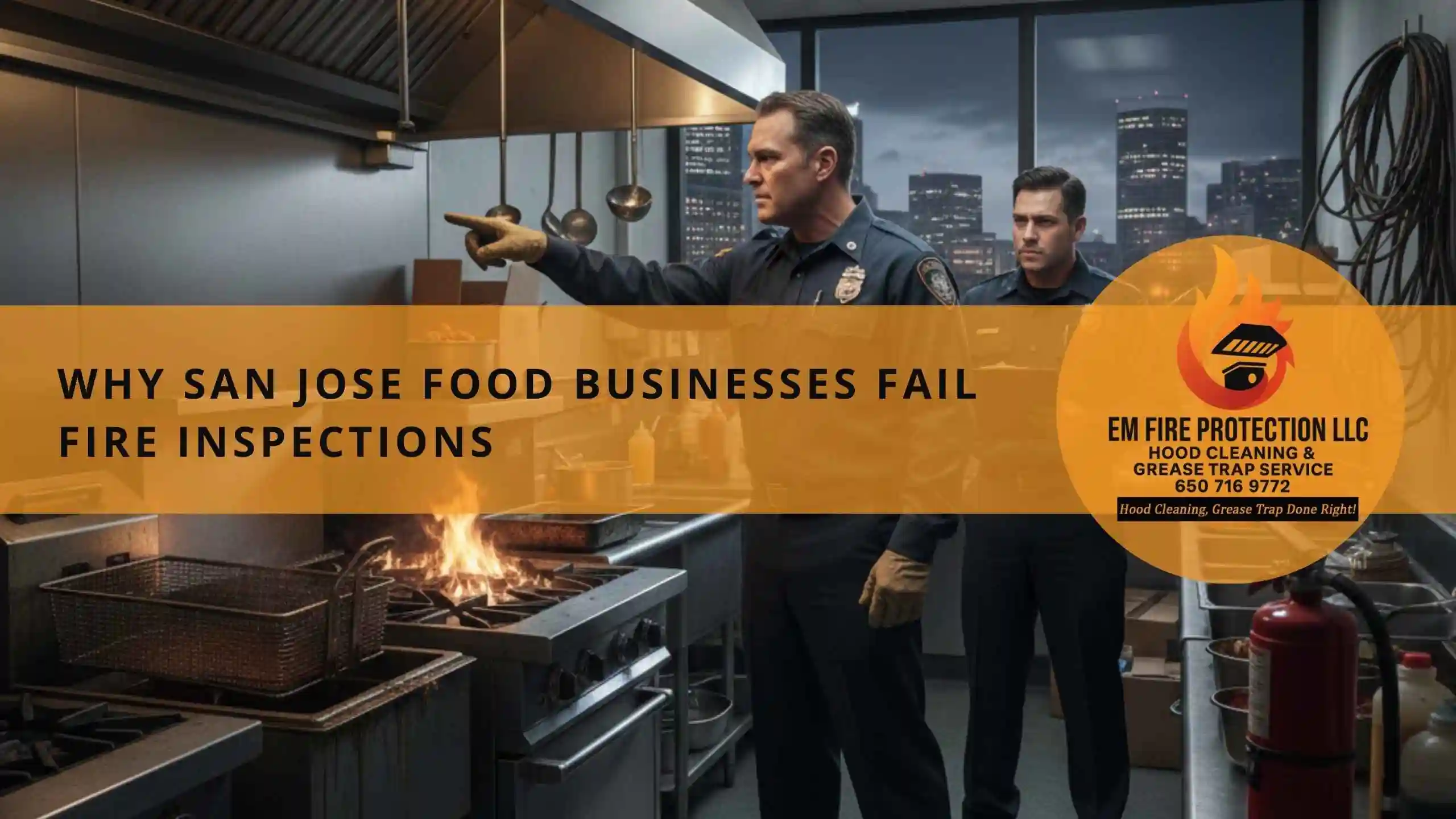
A Real San Jose Inspection Failure Example
A downtown San Jose restaurant recently failed a routine fire inspection due to grease buildup inside the hood system, even though the visible surfaces looked clean.
The owner was shocked. Daily wipe-downs were being done, but professional hood cleaning had been skipped for months.
Result:
- Failed inspection
- Temporary shutdown
- Emergency cleaning required
This is a common situation across San Jose.
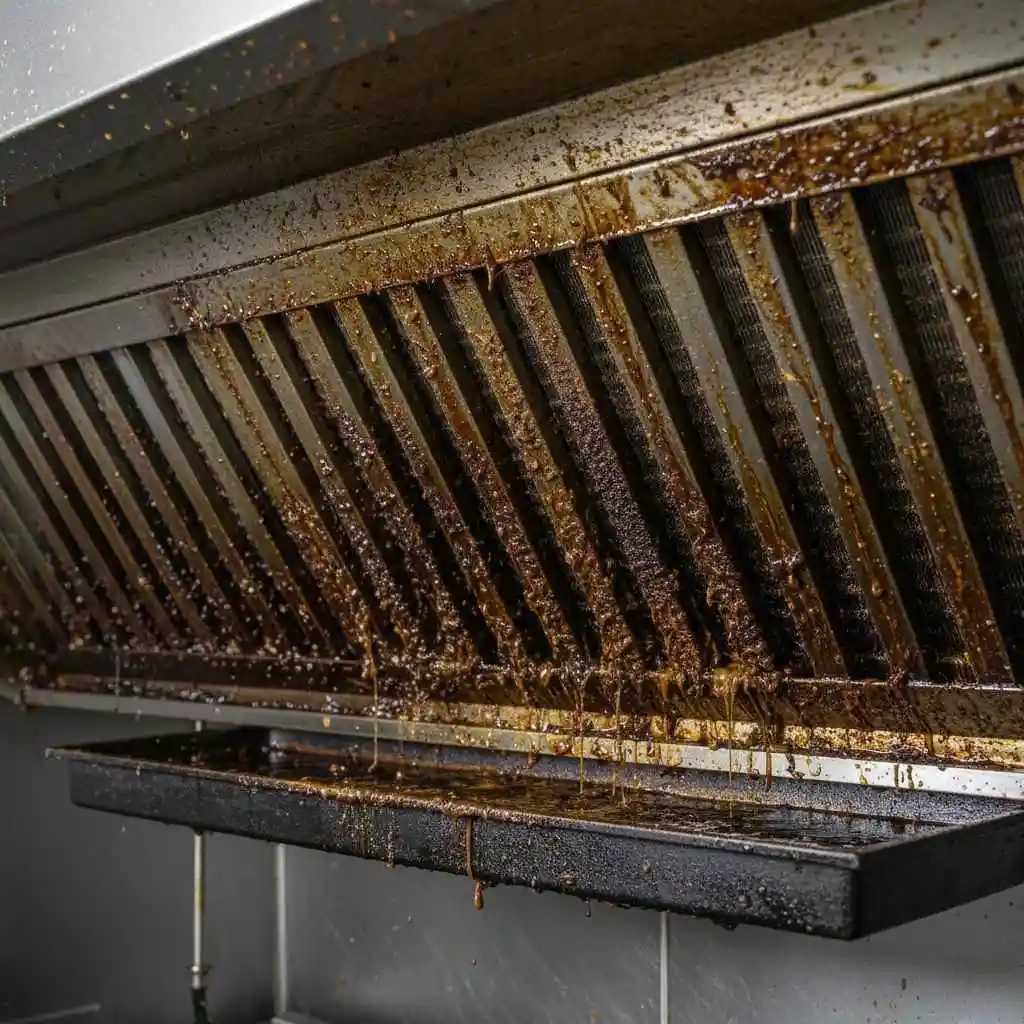
Unclean Exhaust Hoods & Ducts
Fire inspectors in San Jose pay close attention to exhaust systems because grease fires often start there.
Why This Area Matters
- Heat pulls grease upward
- Grease coats duct interiors
- Fires spread rapidly through ducts
If inspectors see visible grease or suspect hidden buildup, it’s an automatic red flag.
Improper Cleaning Documentation
Even if cleaning is done, a lack of proof can still cause failure.
Common Documentation Issues
- No hood cleaning certificates
- Incomplete service records
- Cleaning done by unqualified vendors
San Jose inspectors often ask for proof of professional kitchen exhaust cleaning.
Blocked or Dirty Fire Suppression Systems
Fire suppression systems must remain clean and accessible.
Violations Include
- Grease-covered nozzles
- Obstructed system components
- Improper clearance above cooking equipment
When grease coats suppression systems, they may not activate properly during a fire.
Poor Behind-the-Equipment Cleaning
Inspectors don’t stop at what’s visible.
Hidden Fire Hazards
- Grease behind fryers and stoves
- Debris under cooking lines
- Oil residue near gas connections
In San Jose kitchens with limited space, these areas are often ignored and often cited.
Ceiling, Walls & Overhead Surfaces
Grease doesn’t stop at the hood.
Inspection Focus Areas
- Ceiling tiles above cooking zones
- Wall surfaces near grills
- Light fixtures and vents
Grease-coated surfaces increase fire risk and signal poor maintenance to inspectors.
Why DIY or In-House Cleaning Isn’t Enough
Many San Jose food businesses rely on staff for cleaning, but fire inspections require commercial-grade results.
Limitations of In-House Cleaning
- No access to duct interiors
- Improper degreasers
- Incomplete grease removal
- Increased liability
Fire inspectors expect professional-level cleaning, not surface wipe-downs.
Why San Jose Kitchens Need Professional Fire-Safety Cleaning
Professional commercial kitchen cleaning focuses on fire prevention, not appearance.
What Professionals Provide
- Full hood, duct, and fan cleaning
- Code-compliant grease removal
- Inspection-ready documentation
- Reduced fire risk
- Compliance with local regulations
This level of cleaning is essential for passing inspections in San Jose.
How Often San Jose Food Businesses Should Schedule Cleaning
Frequency depends on kitchen type and volume.
General Guidelines
- High-volume kitchens: Every 1–3 months
- Moderate use: Every 3–6 months
- Low-volume kitchens: At least twice a year
Inspectors may require more frequent cleaning if violations are found.
Benefits Beyond Passing Fire Inspections
Professional kitchen cleaning also:
- Reduces fire insurance risk
- Improves kitchen airflow
- Extends equipment life
- Creates safer working conditions
- Prevents surprise shutdowns
Clean kitchens run more smoothly and safely.
Signs Your San Jose Kitchen Is at Risk of Failing Inspection
- Grease smell even after cleaning
- Sticky residue near vents
- Smoke is lingering longer than usual
- No recent hood cleaning records
- Previous inspection warnings
If any of these apply, it’s time for professional service.
Call to Action: Fire-Safe Kitchen Cleaning in San Jose
Failing a fire inspection doesn’t have to happen.
We provide professional commercial kitchen and hood cleaning services in San Jose, helping food businesses stay compliant, fire-safe, and inspection-ready.
Schedule Your Service Today
Call now
Book a cleaning
Get a fast quote
Protect your business, staff, and customers with professional fire-prevention kitchen cleaning, done right the first time.