Introduction
Every commercial kitchen, whether it’s a food truck, café, or full-service restaurant, relies on a properly functioning exhaust hood system to remove smoke, grease, and heat. But how often should you schedule professional hood cleaning to keep your kitchen safe, efficient, and compliant?
In this guide, you’ll learn industry best practices, for How Often commercial Kitchens on the San Francisco Peninsula Schedule Professional Hood Cleaning.
Why Professional Hood Cleaning Is Essential
A kitchen hood does more than just ventilate cooking fumes. It captures:
- Grease vapors
- Smoke and heat
- Odors and airborne contaminants
Over time, grease builds up inside:
- Hood filters
- Ductwork
- Fans and exhaust plenums
Without regular cleaning, this buildup becomes a major fire hazard, reduces airflow efficiency, and can lead to expensive repairs or health code violations.
Understanding Fire Code and NFPA 96 Standards
The National Fire Protection Association (NFPA) Standard 96 provides clear guidance on how often to clean commercial kitchen exhaust systems:
| Type of Cooking | Cleaning Frequency |
|---|---|
| High-volume (e.g., 24-hour restaurants, charbroiling, wok cooking) | Every 3 months |
| Moderate-volume (e.g., casual dining, sit-down restaurants) | Every 6 months |
| Low-volume (e.g., seasonal, church kitchens, day camps) | Every 12 months |
| Solid-fuel cooking (wood, charcoal) | Every month |
These are minimum standards; many local fire marshals and insurance policies may require more frequent cleaning.
Factors That Affect Your Cleaning Schedule
1. Type of Cooking Equipment
- Charbroilers, fryers, and woks produce more grease-laden vapors.
- Kitchens using solid fuels accumulate sticky, flammable residue faster.
2. Volume of Cooking
A busy diner or hotel kitchen needs more frequent cleaning than a small bistro open a few days a week.
3. Type of Food Prepared
Grilling, frying, and high-fat cooking cause more grease buildup than steaming or baking.
4. Local Health and Fire Codes
Some cities or counties require documented proof of hood cleaning for inspections.
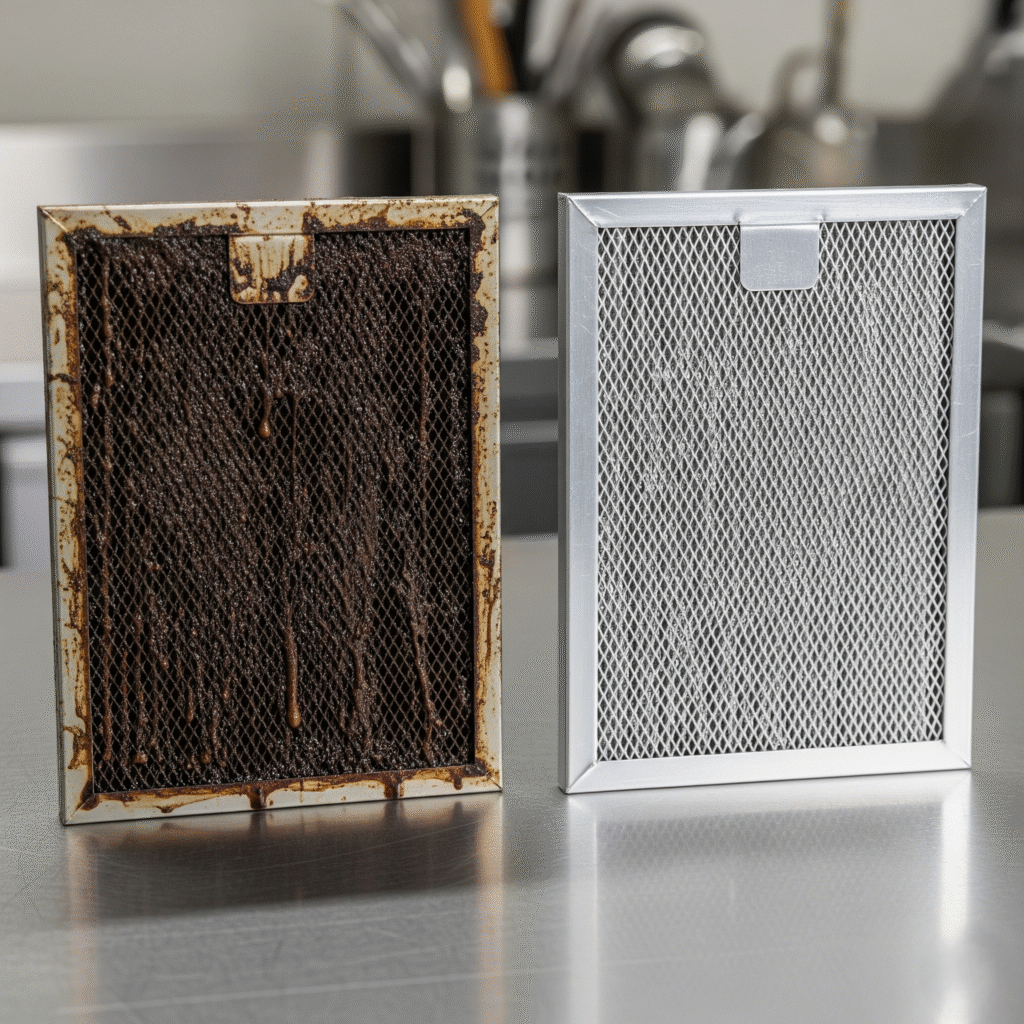
Signs Your Hood Needs Immediate Cleaning
Visible grease dripping from the hood or duct
Strong, lingering grease smell in the kitchen
Reduced airflow or louder fan noise
Yellow/orange flames from cooktops that flicker toward the hood
If you notice any of these, don’t wait for your next scheduled cleaning.
Benefits of Regular Professional Hood Cleaning
1. Fire Risk Reduction
Grease is highly flammable, and routine cleaning removes the biggest hazard in your kitchen.
2. Compliance and Avoiding Fines
Many local fire codes require proof of professional hood cleaning. Missed cleanings can result in:
- Fines
- Temporary closures
- Increased insurance premiums
3. Improved Kitchen Efficiency
Clean systems:
- Ventilate better
- Reduce kitchen heat
- Help equipment last longer
4. Healthier Working Environment
Cleaner air means:
- Less smoke and odor
- Better air quality for chefs and staff
How Professional Hood Cleaning Works
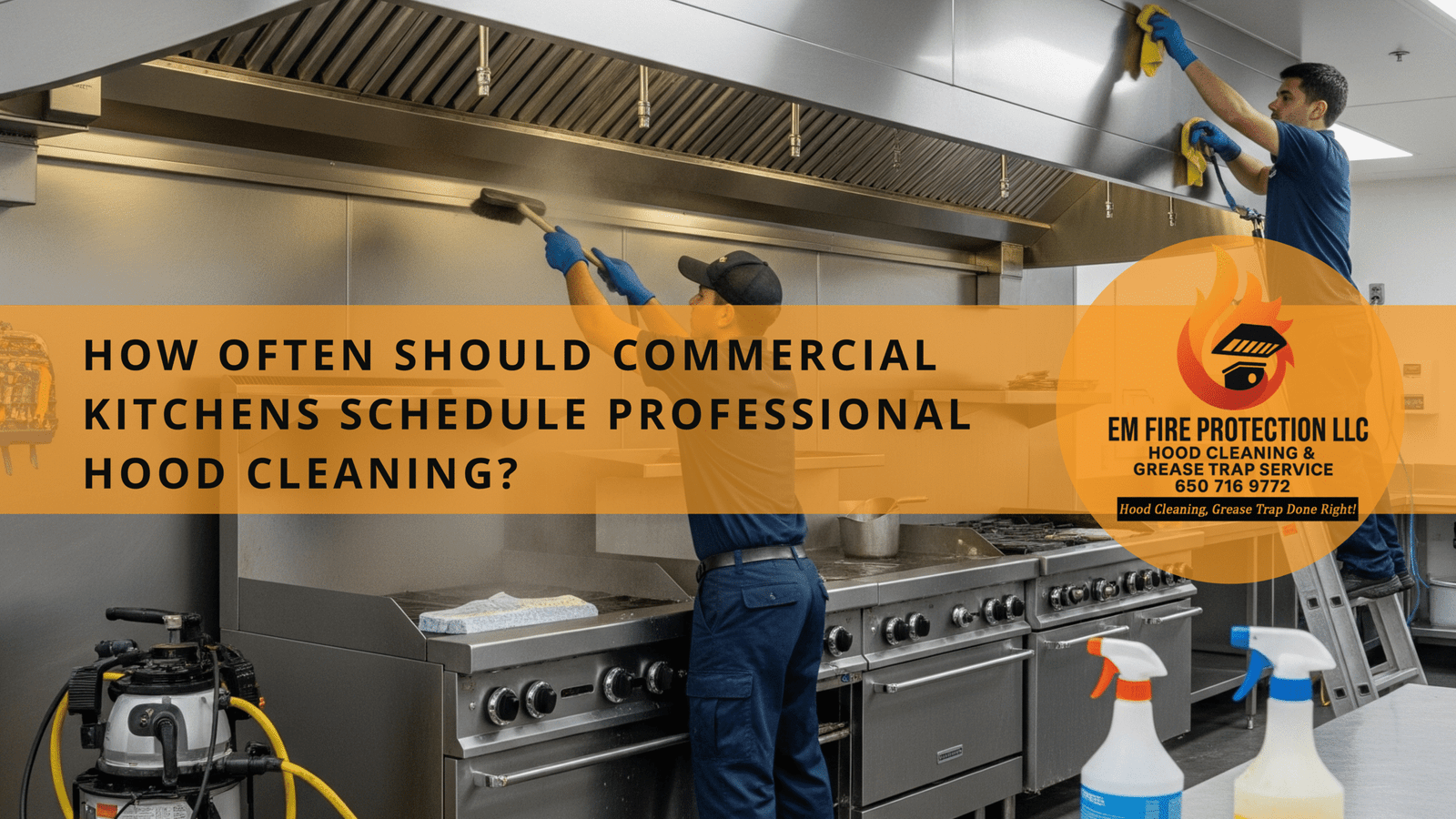
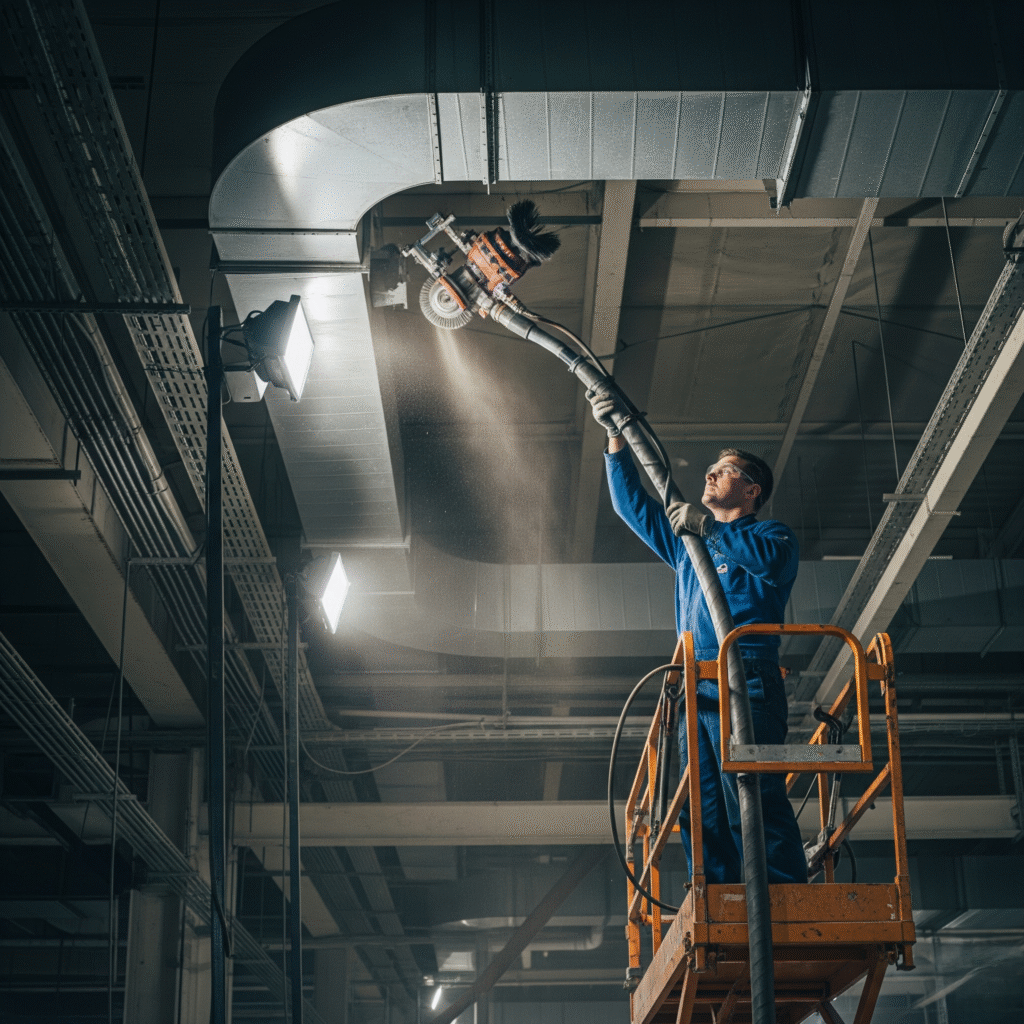
A certified hood cleaning service will:
- Remove and clean filters
- Scrape and pressure-wash interior surfaces
- Clean ductwork and fans
- Provide a certificate and inspection sticker for compliance
Tips to Extend Time Between Cleanings
Clean hood filters weekly (or more often if heavily used)
Train staff to wipe down visible grease on hoods daily
Schedule preventative maintenance inspections
Keep accurate cleaning logs for health and fire inspectors
These steps won’t replace professional cleaning, but they reduce grease buildup.
When to Choose Monthly Cleaning
Monthly professional hood cleaning is recommended for:
- Kitchens using solid fuels (wood, charcoal)
- 24-hour or high-volume quick-service restaurants
- Establishments with repeated fire code violations
Frequent cleaning pays off by reducing emergency shutdowns and costly repairs.
Conclusion
How often should commercial kitchens schedule professional hood cleaning?
- At least every 3 to 6 months for most busiest kitchens
- Monthly, if you use solid fuels or run high-volume cooking operations
- Annually, only for very low-volume or seasonal kitchens
Call-to-Action:
Regular hood cleaning keeps your team safer, helps meet fire code requirements, and protects your investment in equipment and reputation. Contact us today!